A solid career in the pharma world comes from more than lab work or classroom knowledge. It truly accelerates when you understand how medicines behave in real people and how to keep patients safe. Drug safety has become the proverbial workhorse of the industry, and the individuals who follow, scrutinize, and preclude side effects have become the drivers of some of the most significant choices in healthcare. Due to this reason, organizations will rely a lot on professionally trained pharmacovigilance professional team to defend the patients and the brands.
Rules are becoming even stricter in areas and companies are moving in larger volumes to new levels of safety platforms which has raised the demand of specialized PV talent with a great deal of intensity. Salaries for these roles have risen noticeably, and roles that once felt out of reach are now open to beginners with the right skills. Many who earlier felt stuck in repetitive QA, QC, or production work are moving into safety roles, finding faster growth and touching or crossing the 15 LPA mark.
A focused pharmacovigilance course, like the one run by Pharma Connections, walks you through ADR reporting, signal detection, case handling, MedDRA use, and complete safety workflows, giving you direct access to interviews with top CROs and pharma companies.
Why Pharmacovigilance Course Is a Career Breakthrough
Pharmacovigilance is no longer a side function; it has become a core growth area in pharma due to tighter rules, global safety expectations, and ongoing follow-up on products already in use.
1. PV Is the Most Stable and Fast-Growing Career Path
Many pharma roles reach a ceiling quickly, but pharmacovigilance keeps growing because every new product that comes to market adds to the safety workload. Each new drug, vaccine, or device must be tracked for side effects throughout its life, and regulators like the FDA, EMA, MHRA, Health Canada, and CDSCO expect timely, accurate reporting for every serious event. This never-ending flow of cases creates an ongoing demand for people who understand safety rules and documentation.
At the same time, safety teams are adopting modern systems, automation, and intelligent tools to manage large case volumes. That shift makes trained PV professionals even more valuable, especially those who can blend scientific judgment with comfort using new tools. When you build this mix of knowledge through a structured pharmacovigilance course, you move into a space where high-paying offers and quick promotions are realistic rather than rare.
2. PV Allows Freshers to Start With Strong Packages
Manufacturing or QC entry-level positions tend to begin with low wages and gradual promotions, whereas PV might offer you higher payment within a shorter period of time in case you have work-related skills. Once you know the types of ADR, the intake and triage procedures, the requirements of seriousness, the MedDRA hierarchy, follow-up, and the fundamentals of regulatory requirements, recruiters will be able to send you live cases and know that you can be able to get them resolved in a matter of time. This is why freshers with focused PV training are now drawing stronger starting salaries than many traditional pharma profiles.
Large CROs and global pharma companies actively prefer candidates who already know the basics of safety workflows because it reduces the time and cost needed to train them. With the right course behind you, your first offer itself can fall into the 8–15 LPA band, especially if you interview well and show clarity on practical scenarios. For someone just starting out, that kind of head start can completely change long-term earning potential.
3. You Get Job Opportunities Across Multiple Global Companies
A career in pharmacovigilance keeps your options wide, instead of tying you to a single type of employer. With relevant skills, you can move into CROs, global pharma firms, biotech setups, safety consulting teams, clinical research units, or even specialized documentation and writing groups. Because safety work touches many projects and markets, your experience also stays relevant if you later wish to move abroad or shift into related areas such as risk management or regulatory affairs.
Within PV itself, the variety of roles is large: you can work on individual case handling, signal work, periodic reports, literature checks, quality reviews, or safety documentation. Each of these areas offers a clearer path to higher pay than many routine pharma jobs, especially once you gain a few years of solid experience. With a strong PV course behind you, you speak the same language as global teams, which helps when chasing 15 LPA+ roles.
How a Pharmacovigilance Course Helps You Secure a 15 LPA+ Package
Higher pay in PV usually follows people who are prepared, confident, and useful from their first month on the job. A focused course helps you build that profile, so hiring managers see you as someone who can handle responsibility early.
1. You Learn Case Processing From Start to End
Case handling sits at the center of PV work, and most interviews quietly test how deeply you understand it. A strong course breaks down each stage clearly: from intake and triage to checking for duplicates, assessing seriousness, creating a clear story for the case, applying coding, planning follow-ups, and closing within the required timelines. When this flow becomes second nature, real-life work feels manageable instead of confusing.
Many applicants fall short because they remember terms but cannot walk through a case step by step. Good training solves this by letting you practice real scenarios in safety-style formats, so you see how decisions are actually taken. This experience helps you answer panel questions in a structured way, which directly improves your chances of being shortlisted for roles with better pay and quicker progression.
2. You Become Job-Ready With MedDRA Coding & Narrative Writing
MedDRA often feels tricky at first, yet it plays a huge role in PV hiring and daily work. Once you get used to choosing the right level terms, linking them correctly to system categories, and keeping consistency across entries, your cases become clearer and easier to review. Along with this, tidy, logical narratives help medical reviewers and auditors follow what happened to the patient without confusion.
Because many candidates struggle here, those who show comfort with coding and case stories instantly stand out in interviews. Training that spends enough time on practice cases, hands-on MedDRA use, and narrative review helps you avoid typical mistakes. This gives the employers an indication that you will lead to fewer reworks and audit findings, hence making you a better prospect as taking up higher paying PV positions early on.
3. Companies Prefer Trained Candidates Because They Reduce Workload
The teams are stressed to meet strict deadlines, cope with increasing cases, and be prepared to be inspected. When they bring in someone already trained in key PV steps — such as understanding deadlines, recognizing which events need faster reporting, handling seriousness and product quality issues, and knowing when additional data is required — they immediately lighten the load on senior staff.
This is why employers regularly shortlist candidates who show proof of specialized PV learning or certification. With a smaller training curve, these professionals can start contributing faster, which naturally supports better offers and quicker hikes. For many learners, a few months of focused training has led to offers in the low-to-mid teens LPA range for their first or second safety role, which is a strong outcome compared to many other pharma paths.
4. Your Interview Answers Become More Structured & Industry-Oriented
PV interviews often revolve around how you think rather than how many terms you recall. Interviewers want to hear how you judge seriousness, how you see the link between a product and an event, and how you would handle real, sometimes messy, case details. A good course prepares you with this mindset and gives you frameworks to structure your thoughts.
You learn to clearly explain:
- How to look at seriousness for different event types
- How to think about possible drug–event links
- How to walk through a full case flow in simple steps
- How to discuss the basics of risk planning in safety
When you respond with calm, stepwise, and practical answers, panels quickly feel you are ready for real work. That naturally increases the level of roles and salary brackets they consider you for, especially in fast-growing PV teams.
Pharma Connections Success Stories
Here are real transformation stories which will let you know how Pharma Connections has delivered their applicant a profession filled with joy, hefty package, and accolades.
1. Safety Associate at Accenture
Earlier Package: 4.2 LPA
After Taking Pharma Connections Course: 12 LPA
Company Joined: Accenture
Before joining Pharma Connections, she found it difficult to move from general pharma work into safety roles and often felt underconfident while explaining PV basics in interviews. After finishing the course, she could clearly walk interviewers through seriousness thinking, follow-up planning, narrative building, and the full ICSR journey in a safety database. This clarity made her stand out, and Accenture offered her 12 LPA for a Safety Associate role.
2. PV Case Processor at IQVIA
Earlier Package: 3 LPA
After Taking Pharma Connections Course: 15 LPA
Company Joined: IQVIA
He started as a fresher with only classroom exposure to pharma rules and almost no idea about live safety workflows. Pharma Connections helped him practice end-to-end cases — from triage and coding through to closure — until he could confidently explain each decision to an interview panel. His strong grip on causality basics and MedDRA layers impressed IQVIA, which offered him 15 LPA as a PV Case Processor.
3. Drug Safety Associate at Syneos
Earlier Package: 5.6 LPA
After Taking Pharma Connections Course: 16 LPA
Company Joined: Syneos
This candidate had a few years of pharma experience but felt stuck at the same pay range and role level. With focused PV training, he learned how periodic reports, seriousness decisions, and rapid reporting windows all tie together in real projects. Syneos saw that he could contribute beyond basic case tasks and offered him a Drug Safety Associate position at 16 LPA, almost tripling his earlier package.
4. Medical Writer at Parexel
Earlier Package: 6.2 LPA
After Taking Pharma Connections Course: 18 LPA
Company Joined: Parexel
She always enjoyed writing but did not know how to combine that interest with a strong pharma career. The program at Pharma Connections showed her how safety documents, periodic reports, and clinical narratives are structured, along with the medical language needed to keep them accurate. Parexel recognized this blend of PV understanding and writing strength and offered her 18 LPA in a Medical Writing–Safety role.
5. PV Scientist at Roche
Earlier Package: 7.5 LPA
After Taking Pharma Connections Course: 20 LPA
Company Joined: Roche
He wanted to move from basic tasks into more analytical safety work but lacked exposure to signal-related concepts and advanced coding logic. After training, he gained clarity on pattern recognition in safety data, deeper causality thinking, and consistent MedDRA use for complex cases. Roche valued this higher-level understanding and brought him on board as a PV Scientist with a 20 LPA package.
6. Global Safety Analyst at Novartis
Earlier Package: 8 LPA
After Taking Pharma Connections Course: 22 LPA
Company Joined: Novartis
He aimed for a global role but needed stronger skills in follow-up, medical reviews, and literature reviews to meet international expectations. The course helped him practice these areas in detail so he could discuss them confidently during interviews. Novartis offered him a Global Safety Analyst position at 22 LPA, reflecting both his upgraded skillset and the strong market for experienced PV professionals.
How Pharma Connections Helps You Reach a 25 LPA Package With Pharmacovigilance Courses
Pharma Connections has grown into a platform where pharma professionals can shift from average jobs to high-growth pharmacovigilance careers. The institute focuses on building a deep understanding of how real safety systems work, how regulators think, and what global PV teams actually need from new hires. Many people who once hovered around 3–6 LPA now break into 15–25 LPA roles at large CROs and multinational companies after gaining this clarity and direction.
Below are the exact ways Pharma Connections pushes you towards the 25 LPA bracket.
1. Real PV System Training That Companies Actually Want
Most generic courses stop at explaining basic concepts, but Pharma Connections gives you a clear look at day-to-day PV operations — the tools used, the case routes, and the documentation style companies expect. This style of training shifts you from simply having a certificate to actually being ready for live projects.
You gain clarity in:
- End-to-end ADR case processing
- Medical coding, narrative writing, seriousness assessment
- Global safety database functions
- Signal detection basics and compliance checkpoints
Because of this exposure, you are able to talk about PV in a way that matches what hiring managers hear from their own teams, which helps you aim for better offers with more confidence.
2. Deep Training in Case Processing — The Skill That Gets 20–25 LPA Offers
Employers often reserve their best packages for people who can handle complex cases with minimal supervision. The focus on detailed case work at Pharma Connections ensures you do not stop at definitions but actually learn how to think through unclear or challenging situations. You see how experienced safety staff review data, question gaps, and decide the next step.
Key takeaways:
- Understanding seriousness, expectedness, and causality assessment
- Hands-on exposure to global reporting timelines
- Mastery in writing high-quality case narratives
- Practical decision logic for ambiguous cases
With this level of preparation, your interviews with companies like IQVIA, Syneos, Accenture, Labcorp, or Parexel become more about role fit than basic screening, opening doors to 20–25 LPA roles.
3. Interview-Focused PV Preparation That Matches Global Hiring Standards
Another reason Pharma Connections alumni move into strong packages is the way they are prepared for interviews. Trainers familiar with current PV hiring styles design mock rounds that feel close to real panel conversations. You work through case-based questions, tricky scenarios, and follow-up discussions until you know how to explain your reasoning calmly.
Interview advantages you get:
- Real PV case-based mock interviews
- Training on situational judgment questions
- Immediate correction + improvement feedback
- Guidance on how to structure technical answers
By the time you meet actual interviewers, you already have experience handling similar questions, which naturally boosts your confidence. That confidence often translates into better roles and higher offers in the 20–25 LPA area, especially in teams looking for future leads.
4. Resume Positioning That Makes You Look Like a High-Value PV Candidate
Strong skills alone are not enough if your resume does not show them clearly. Pharma Connections helps you shape a profile that highlights safety-related tasks, tools, and responsibilities in a way recruiters and automated systems quickly notice. Instead of looking like a general pharma professional, you present yourself as someone already aligned with PV needs.
Resume elements Pharma Connections helps you refine:
- Safety-specific achievement bullets
- Case processing workflow representation
- Highlighting core regulatory exposure
- Presenting PV technical keywords for ATS systems
This kind of positioning improves both the number and quality of interview calls you receive, especially for 15–25 LPA positions in established safety teams.
5. Direct Job Assistance and Guidance for Top MNC & CRO Recruitment
Beyond teaching, Pharma Connections actively guides learners towards better companies and smarter career moves. The team helps you short-list organizations, understand their expectations, and prepare for them one by one instead of applying blindly everywhere. This targeted approach saves time and keeps your efforts focused on roles that genuinely match your goals.
Placement-focused guidance includes:
- Company-wise interview questions
- Salary negotiation strategies
- Identifying top-paying PV roles
- Mapping your strengths to specific companies
Because of this support, learners regularly receive offers from leading names such as Accenture, Deloitte, IQVIA, Novartis, Roche, Pfizer, Syneos, and Parexel, where strong PV experience is well rewarded. When you channel your effort towards such employers, reaching or crossing the 25 LPA mark becomes far more achievable over time.
Conclusion
Pharmacovigilance has become one of the most promising and secure career choices for pharma and life science graduates seeking both good pay and long-term growth. As companies build larger safety units and respond to stricter rules worldwide, they continue to open well-paying roles for people who understand real-world PV workflows. A focused pharmacovigilance course bridges the gap between basic academic learning and the depth companies expect in safety teams.
With structured training, repeated interview practice, real-case exposure, coding exercises, and guided learning paths, Pharma Connections has positioned itself as a popular choice for PV aspirants in India. Our learners frequently move into 12–22 LPA or higher roles in recognized CROs and pharma companies, proving how powerful the right preparation can be. If you are serious about building a high-growth pharma career, this is the right time to enroll in a Pharmacovigilance Course from Pharma Connections and work towards your own 15 LPA+ milestone.
Related Posts
How to Find Qualified CSV and CSA Professionals for GxP Projects
When pharmaceutical and life sciences companies manage regulated technology projects, they must recruit the right…
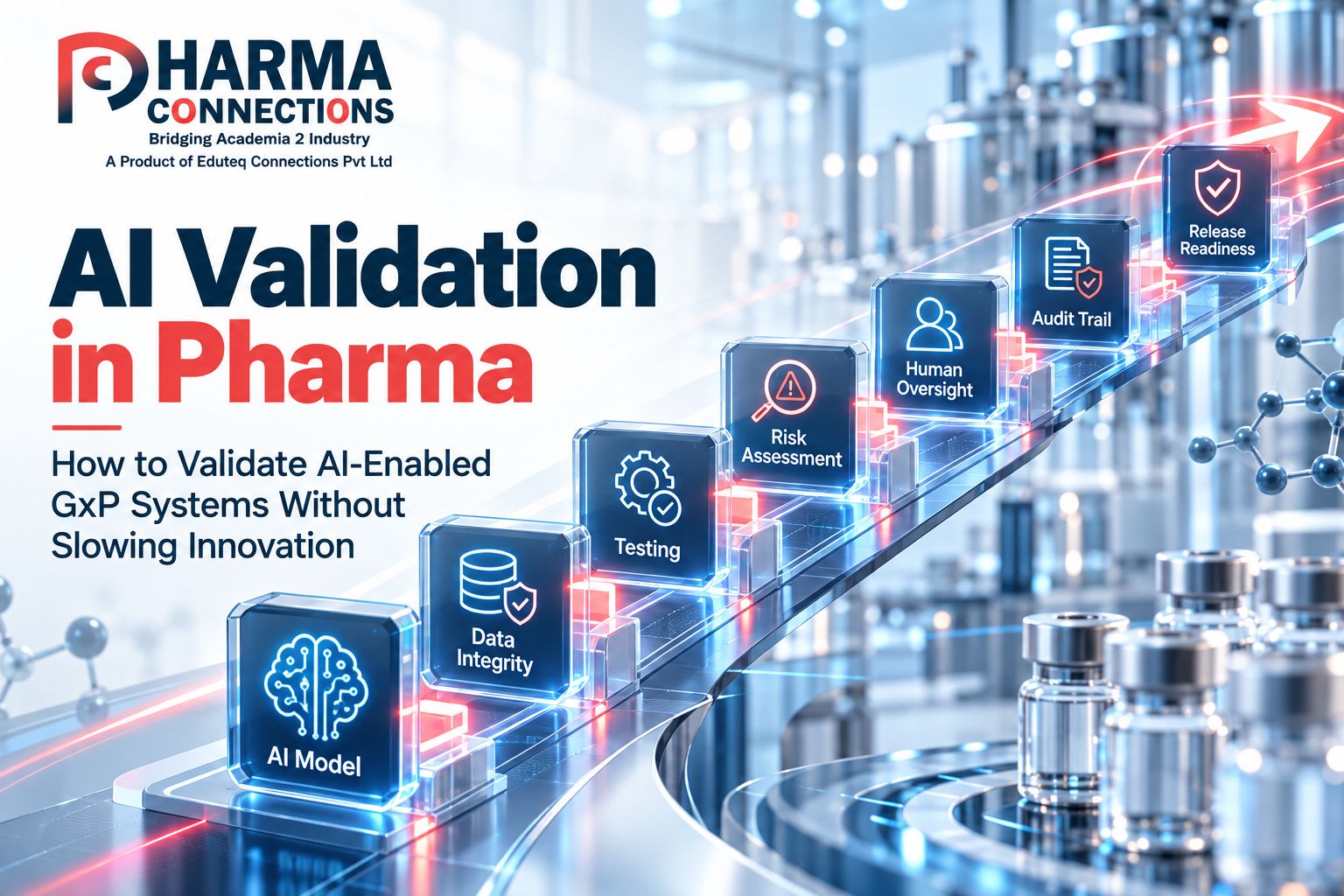
AI Validation in Pharma: How to Validate AI-Enabled GxP Systems Without Slowing Innovation
Artificial intelligence is quickly moving beyond testing into core pharmaceutical processes. AI-based applications can support…
Contract CSV resources: When Should Pharma Companies Use Contract Validation Professionals?
Pharmaceutical validation teams don’t always need the same resources year-round. A business might be adequately…