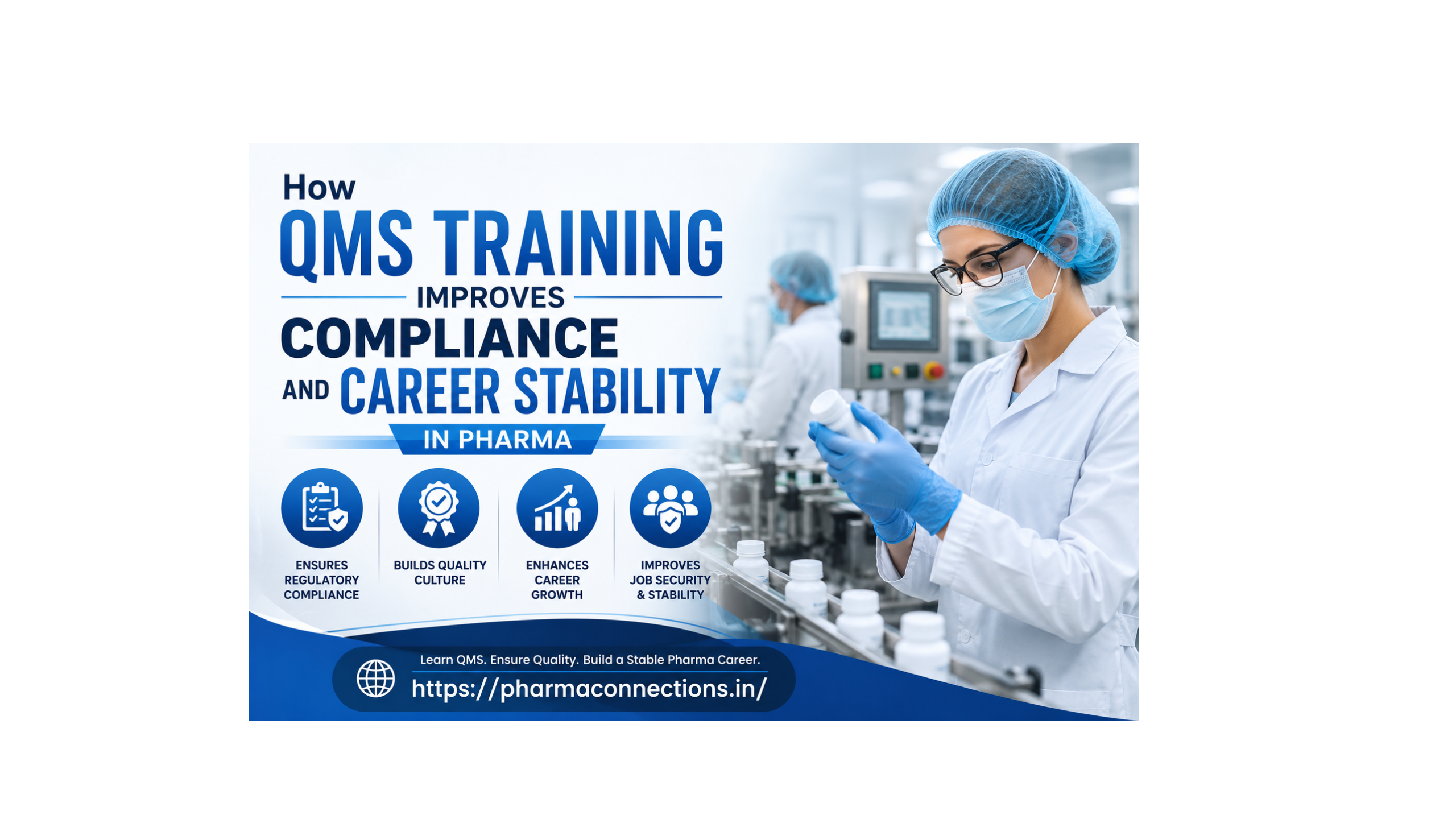
The value of QMS compliance training has taken an enormous turn, becoming one of the most useful investments for professionals following a long-term career in the pharmaceutical sector. Employers are more willing to hire professionals with knowledge of Quality Management Systems (QMS) as pharmaceutical companies shift towards regulatory compliance, digital quality systems, and more stringent quality standards.
Real-world QMS expertise will help professionals operate quality processes, facilitate audits, address deviations, undertake CAPA, maintain records, and participate in continuous improvement programs.
Such abilities not only keep organizations in compliance but also enhance an individual’s employability, promotion prospects, and long-term career stability.
No matter whether you are a fresher in the pharmaceutical industry or a professional seeking to advance in your career, QMS compliance training not only provides you with hands-on, industry-related skills that will be handy in the quality, manufacturing, compliance, validation, and regulatory departments, but also career-enhancing competencies that will last longer.
Why Compliance Has Become a Business Priority in Modern Pharma
As pharmaceutical companies operate in an increasingly regulated environment, compliance is no longer viewed as the responsibility of only the Quality Assurance department. Each of the functions plays a role in sustaining the quality of products, patient safety, and regulatory compliance. This growing focus has made QMS compliance training one of the most relevant professional development programs in today’s pharmaceutical industry.
Regulatory Expectations Continue to Increase
International regulatory bodies are increasingly exerting pressure on quality systems, documentation, risk management, and inspection preparedness. QMS-knowledgeable professionals guide organizations by consistently meeting these evolving compliance requirements.
Quality Systems Support Every Department
To provide consistent quality and operational excellence, modern pharmaceutical organizations deploy structured Quality Management Systems in the manufacturing, laboratories, engineering, warehousing, validation, and supply chain operations.
Compliance Reduces Operational Risks
Compliance practices have been shown to assist organizations in reducing instances of deviations, eliminating recurring quality concerns, curtailing regulatory observations, and ensuring continuity of business while preserving product quality and patient safety.
Digital Transformation Requires Better Compliance
Cloud-based documentation systems, Electronic Quality Management Systems and automated quality processes demand the involvement of professionals who know both the digital technologies and the principles of structured quality management.
Skilled Compliance Professionals Are Increasingly Valuable
The higher the compliance efforts of pharmaceutical firms, the better the professional with hands-on experience of QMS will be able to retain his/her professional skills and career prospects and enhance the long-term job stability.
How QMS Compliance Training Builds Industry-Ready Skills
QMS compliance training is not about imparting quality ideas and regulatory jargon. It equips professionals to operate in an actual quality system in pharmaceuticals, troubleshoot compliance issues, and make a valued contribution to the controlled practice. Such practical skills help professionals perform well at the outset of their careers and support sustained professional growth.
Understanding Quality Management Systems
Professionals gain an understanding of the operations of Quality Management Systems in pharmaceutical companies, including quality policies and documentation systems, process controls, compliance measures, and continuous improvement activities that help ensure product quality is maintained.
Learning CAPA and Deviation Management
QMS compliance training provides practical ideas of stating deviations, root cause analysis, Corrective and Preventive Actions (CAPA), and best CSV and CSA course of repetitive quality problems through systematic quality procedures.
Building Audit Readiness
Professionals know how to prepare documentation, maintain quality records, facilitate internal and external audits, respond to audit observations, and assist organizations in being inspection-ready year-round.
Developing Risk Management Skills
Professionals know how to prepare documentation, keep quality records, facilitate internal and external audits, respond to audit observations, and assist organizations in being inspection-ready all year round.
Strengthening Documentation Practices
Pharmaceutical compliance is based on accurate documentation. Training on QMS teaches professionals how to prepare, review, manage, and maintain quality documents, ensuring accuracy, traceability, and regulatory compliance.
Career Benefits of QMS Compliance Training
In addition to enhancing technical expertise, QMS compliance training has long-term career benefits for professionals in the pharmaceutical sector. Employers are increasingly placing a premium on candidates with knowledge of quality systems, as these skills directly translate into regulatory compliance, operational efficiency, and business success.
Better Job Opportunities
Hiring of professionals who have acquired practical QMS skills are favored in the hiring process, as they have demonstrated skills relevant to the industry in terms of quality, compliance, manufacturing, and validation.
Stronger Career Stability
Quality Management Systems are needed regardless of technological progress or regulatory changes. QMS professionals will always be useful as organizations enhance Compliance and quality programs.
Higher Promotion Potential
Risk management, continual improvement, compliance processes, and strong knowledge of quality systems are essential competencies that managers and employers usually promote for professionals to manage their organizations and lead them towards success.
Increased Professional Confidence
Learning pharmaceutical quality systems will allow professionals to work more confidently, understand how to communicate in the audit process, address compliance issues, and play a significant part in cross-functional projects.
Long-Term Industry Relevance
pharmaceutical firms keep investing in digital quality systems and compliance programs worldwide; QMS professionals are not left behind in the realms of sustainable career advancement and leadership in the future.
Why Pharma Companies Value Professionals With QMS Compliance Training
Pharmaceutical institutions recognize that good quality systems must rely on qualified professionals who are knowledgeable about compliance, documentation, and continuous improvement. That is why applicants who have undergone QMS compliance training are increasingly preferred in hiring and internal promotions. The value they would add to quality-driven operations is quantifiable and spans various business operations.
They Strengthen Regulatory Compliance
Individuals possessing QMS expertise know how to adhere to GMP guidelines, company procedures, and quality guidelines as required so that the organization remains in control of regulatory requirements and minimizes the likelihood of observations during inspections.
They Improve Operational Efficiency
Professionally trained individuals are familiar with standard work processes, paperwork, and process controls that can make them more productive, minimize mistakes, and improve departmental efficiency without affecting product quality.
They Support Successful Audits
Internal analysis and customer and regulatory audits are among the areas that require proper documentation and sound quality systems. QMS-trained professionals can provide high-quality support, assisting with audit preparation and being ready to handle inspections.
They Contribute to Continuous Improvement
Organizations like to have employees who can identify gaps in processes, propose more realistic recommendations, initiate corrective measures, and be actively involved in establishing a quality culture across departments.
They Adapt to Modern Quality Systems
With the adoption of electronic Quality Management Systems, automated workflows, and digital documentation platforms, pharmaceutical firms and professionals with QMS expertise will change more quickly and facilitate the adoption of new technologies.
Why Pharma Connections Is Best for QMS Compliance Training
The most suitable place where professionals may acquire QMS compliance training to achieve stable, fulfilling, and future-focused careers in the pharmaceutical industry is Pharma Connections. The training programs are designed to combine practical knowledge and application in quality management and real-world industry, enabling learners to develop the skills that are the main focus of pharmaceutical companies.
Industry-Focused Curriculum
The curriculum includes Quality Management Systems, CAPA, deviations, change control, document control, internal audit, quality risk management, GMP, and regulatory compliance, in accordance with prevailing practices in the pharmaceutical industry.
Practical Learning Experience
The participants are given practical exposure to quality documentation, compliance processes, audit preparation, investigations, and case studies (real-life pharmaceutical operations).
Guidance From Experienced Industry Experts
Industry professionals offer useful insights into compliance, quality systems, quality checkups, and operational excellence, and help learners realize QMS application in real-life pharmaceutical settings.
Modern Compliance Training
The programs are periodically revised to incorporate the changing regulatory expectations, digital quality systems, and up-to-date industry best practices, so the learners can remain in line with the modern pharmaceutical needs.
Career-Oriented Development
Pharma Connections assists professionals in enhancing technical skills, gaining confidence in interviews, preparing to grow professionally, and establishing long-term stability, using practical training in QMS compliance.
Conclusion
Being the cornerstone of every successful pharma company, quality and compliance training of QMS makes QMS compliance training one of the best career investments for the modern professional. The need for professionals with practical QMS knowledge will only increase as companies continue to advance by meeting stronger regulatory expectations, adopting digital quality systems, and focusing on continual improvement.
Whether starting your pharmaceutical career or preparing to take on increased responsibility, building knowledge of Quality Management Systems enhances your employability, builds career confidence, and provides long-term career security across a wide range of pharmaceutical services.
Pharma Connections offers the perfect place to master QMS compliance training through practical, industry-centered learning. Through training by experienced instructors, hands-on case studies, up-to-date courses, and career development programs, Pharma Connections equips trainees with the tools and skills to build successful, stable, and future-oriented careers in the pharmaceutical industry.
FAQs
1. What is QMS compliance training?
QMS compliance training teaches professionals how to implement, maintain, and improve Quality Management Systems while ensuring regulatory compliance and supporting pharmaceutical quality standards.
2. Who should enroll in QMS compliance training?
Freshers, QA and QC professionals, production personnel, compliance specialists, supervisors, and working professionals seeking career growth can all benefit from QMS compliance training.
3. How does QMS compliance training improve career stability?
It develops practical quality management and compliance skills that remain essential across pharmaceutical organizations, making professionals more valuable and improving long-term job security.
4. Does QMS compliance training help with promotions?
Yes. Professionals with strong QMS knowledge are often considered for greater responsibilities because they can lead compliance initiatives, support audits, and improve quality processes.
5. Why choose Pharma Connections for QMS compliance training?
Pharma Connections provides practical, industry-focused QMS compliance training that helps professionals develop job-ready skills, strengthen regulatory knowledge, and prepare for long-term success in the pharmaceutical industry.
Related Posts

How to Find Qualified CSV and CSA Professionals for GxP Projects
When pharmaceutical and life sciences companies manage regulated technology projects, they must recruit the right…
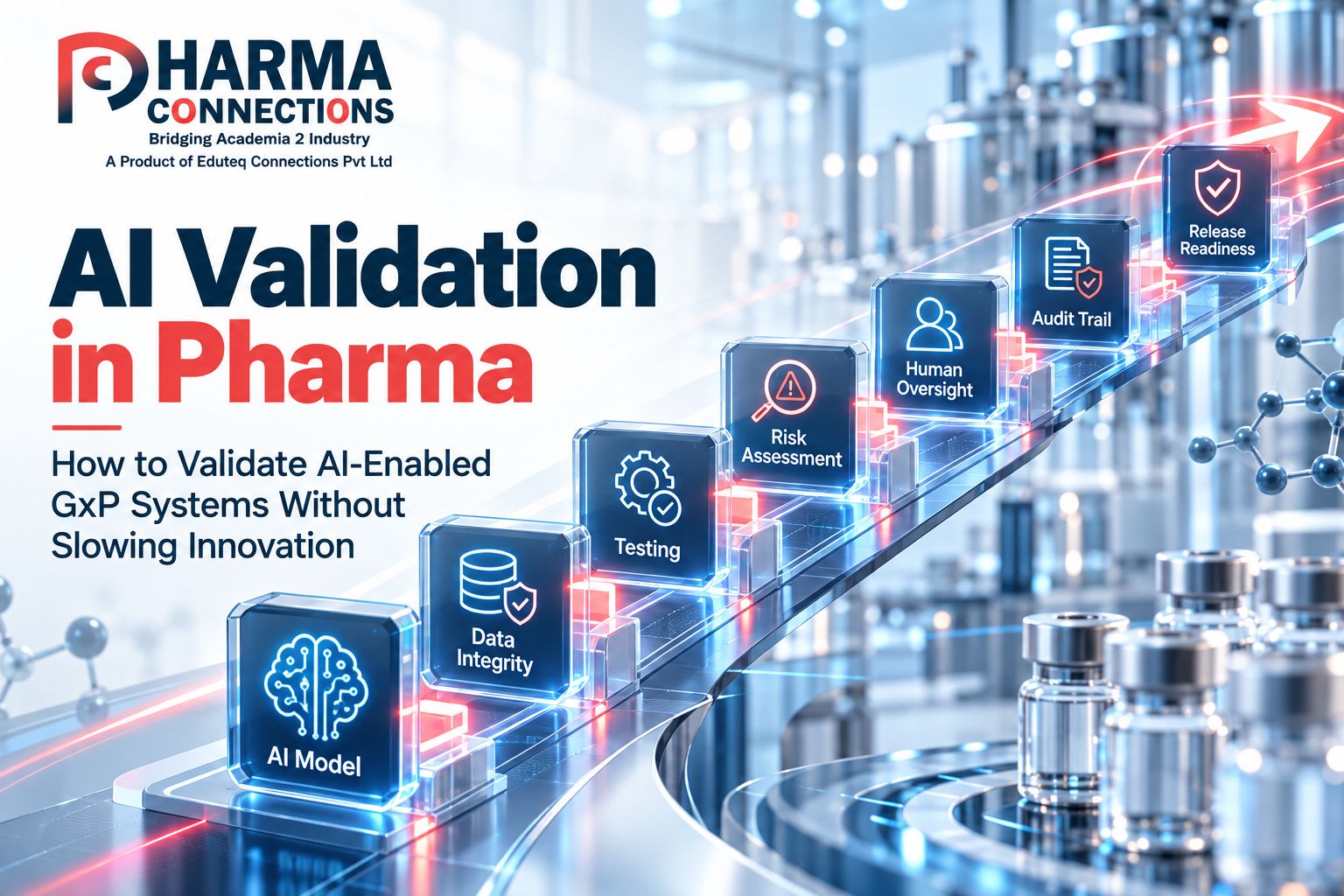
AI Validation in Pharma: How to Validate AI-Enabled GxP Systems Without Slowing Innovation
Artificial intelligence is quickly moving beyond testing into core pharmaceutical processes. AI-based applications can support…
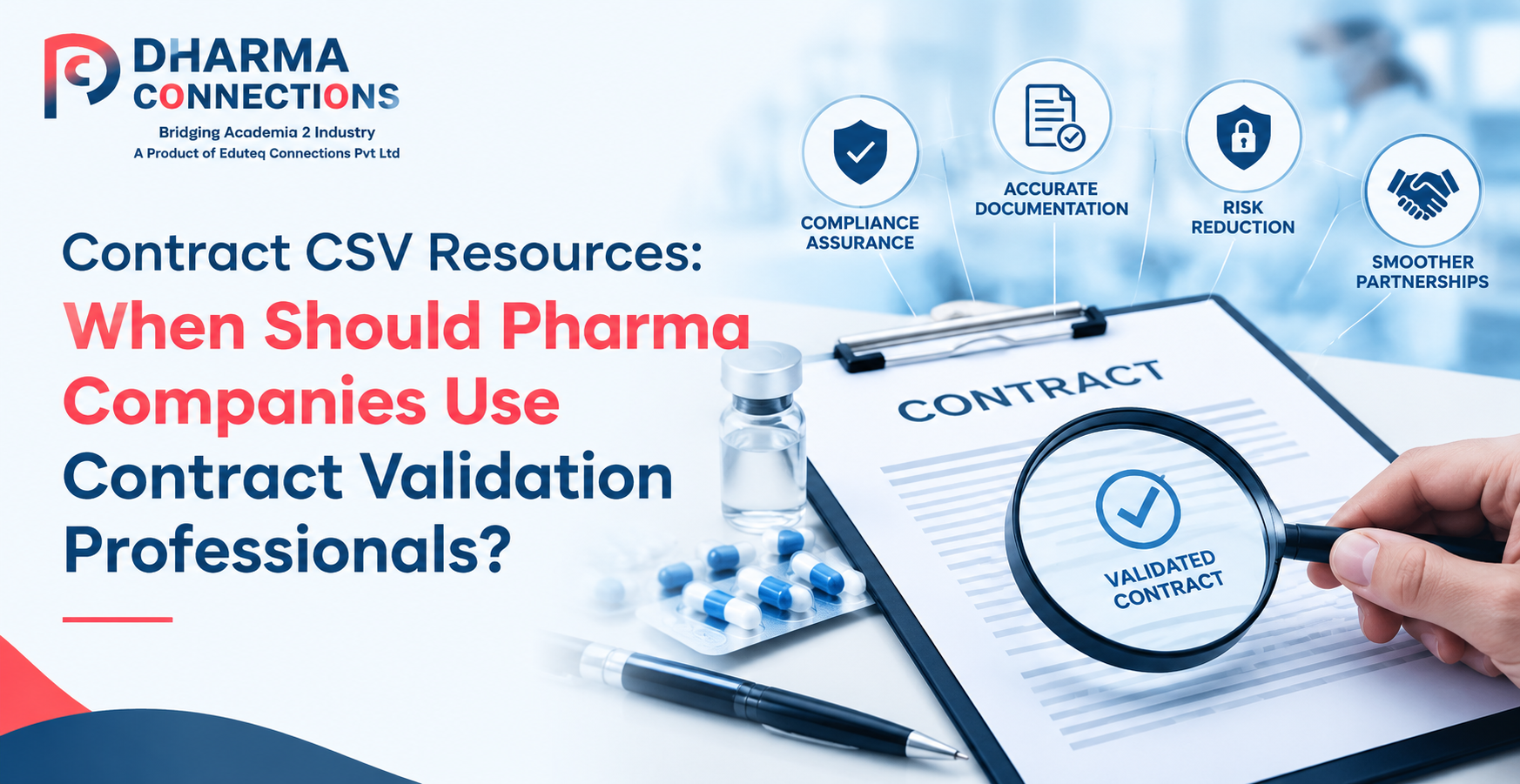
Contract CSV resources: When Should Pharma Companies Use Contract Validation Professionals?
Pharmaceutical validation teams don’t always need the same resources year-round. A business might be adequately…