Compliance, documentation control, audit readiness, and quality systems are all the rage in the pharmaceutical industry today. Organizations do not simply recruit applicants based on their qualifications anymore; instead, they select practitioners who are knowledgeable about controlled workflows and can be effective on the first day of employment. This is one of the main reasons QMS training for pharma jobs is becoming increasingly useful for freshers and working professionals alike.
Simultaneously, pharma audits are getting tougher. Regulatory agencies and client auditors require organizations to have robust documentation systems, process consistency, CAPA management, and operational traceability. As a result, pharma companies are more inclined to hire employees with prior knowledge of Quality Management Systems and audit-oriented implementation.
Even in interviews, companies are increasingly posing practical questions about SOPs, deviations, CAPA, documentation practices, audit handling, and compliance systems. Applicants who possess QMS knowledge are more effective since they are familiar with the actual pharma processes rather than just theoretical information.
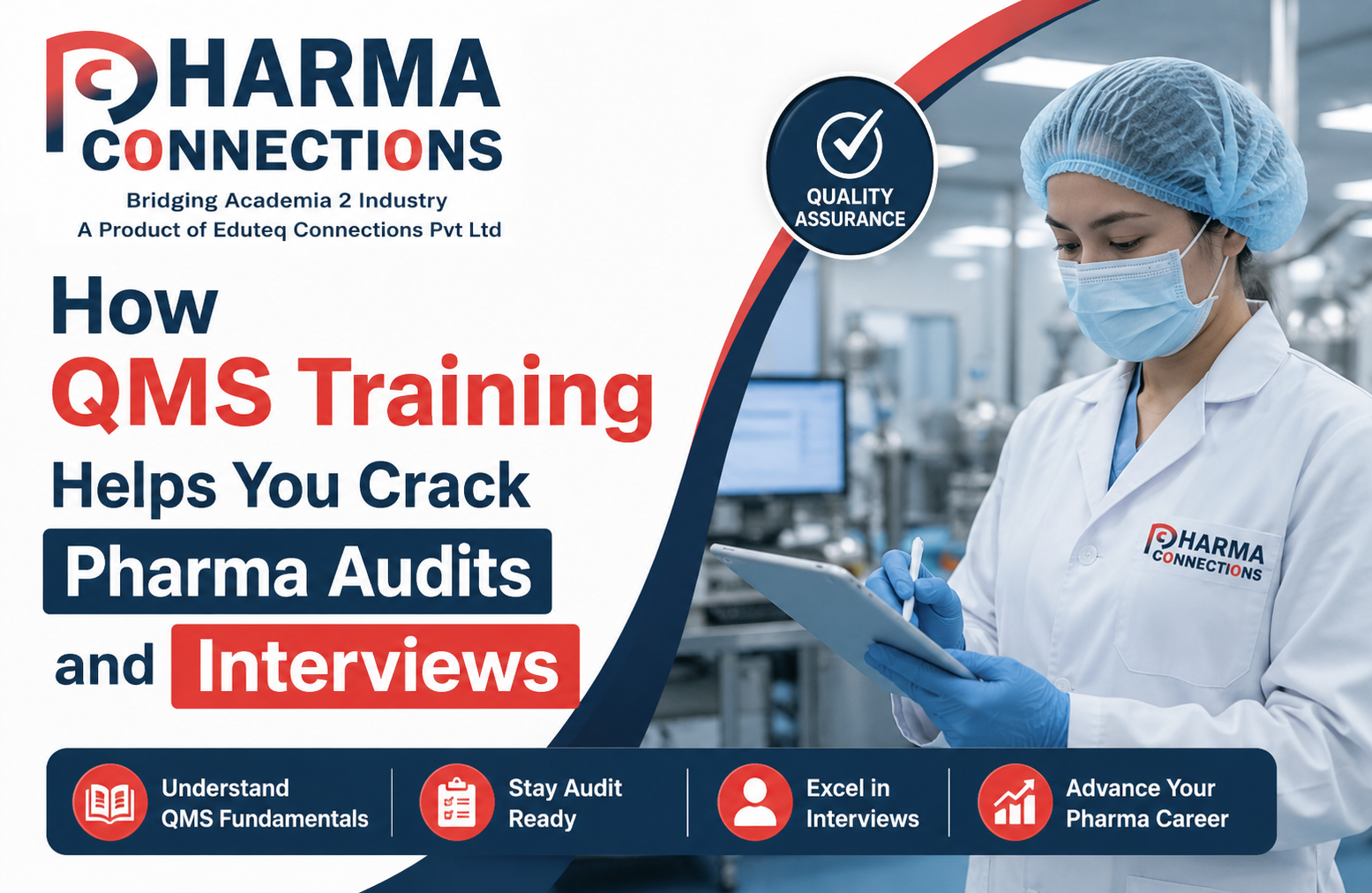
The article describes the role of QMS training in pharma jobs in helping professionals pass pharma interviews, enhance audit knowledge, develop stronger compliance capabilities, and pursue long-term career development prospects in the pharmaceutical sector.
Quality Management System training is aimed at assisting professionals in learning how pharma companies can uphold compliance, documentation control, audit preparedness, and quality systems and operations.
Pharma QMS-trained professionals are taught the functionality of regulated pharma environments and the interrelationships among quality systems across different departments.
QMS training exposes the candidates to realistic work processes in pharmaceutical firms. This assists professionals in knowing how the compliance systems work in day-to-day operations.
The professionals learn how SOPs are developed, revised, applied, and supervised in controlled settings.
Knowledge of CAPA and Deviation Handling
Applicants learn about the process of detecting quality issues, investigating them and addressing them through formal compliance procedures.
This improves:
Pharma companies expect employees to understand quality-oriented workflow and documentation discipline.
Professionals are taught how regulated activities are conducted during inspections, internal audits, and client reviews.
QMS training enhances awareness of traceability, process consistency, and compliance-oriented execution.
This creates:
The Pharma interviews today are geared more towards practical knowledge than just the theoretical side. Organizations desire employees who are capable of working in controlled conditions without fear. Here, in the QMS training on pharma jobs, it forms a significant benefit.
Most of the candidates fail in interviews due to a lack of practical pharma systems despite knowing the concepts of academics.
Better Understanding of SOP-Related Questions
QMS-trained professionals are familiar with implementing SOPs, controlling documents, and executing work processes, which allows them to respond to interview questions more authoritatively.
Stronger Understanding of CAPA and Deviations
Candidates get acquainted with root cause analysis, corrective measures and preventive measures applied within pharma companies.
This assists in the interviews since the candidates are able to talk about:
Builds Confidence During Compliance Discussions
Interviewers usually ask questions to assess how well candidates understand compliance systems and audit expectations.
Better Communication During Technical Interviews
QMS-trained professionals are capable of discussing preparedness for audits, documentation systems, and operations aimed at compliance more effectively.
Improves Practical Industry Vocabulary
Applicants become accustomed to industry-specific terms related to quality systems and controlled operations.
This improves:
Helps Freshers Compete With Experienced Candidates
The freshers have a problem, as they do not get any real-life exposure. QMS training is effective in closing this gap by introducing workflows relevant to the industry.
Creates Industry-Ready Understanding
Candidates learn real-world quality systems rather than relying on theoretical concepts alone.
Pharma companies like to hire those candidates who are already familiar with compliance-driven workflows.
This supports:
Supports Better Performance in QA and QC Interviews
Quality Assurance and Quality Control interviews are very much inclined towards documentation, compliance systems and audit comprehension.
Improves Quality System Knowledge
Professionals get acquainted with quality-oriented working processes and control over the operations.
Better Understanding of Audit Questions
Applicants will respond to questions touching on documentation practices, deviations, CAPM and SOP systems more proficiently.
This creates:
Pharma companies are always ready to undergo regulatory check-ups, internal audits, and client audits. Quality systems are known to employees, and this factor contributes to strong audit preparedness.
Improves Audit Readiness Awareness
QMS-trained professionals in pharma jobs know how organizations can be prepared for an inspection and maintain controlled operations.
Candidates learn how documentation should be maintained to ensure traceability and compliance during audits.
Professionals will understand the importance of workflow and documentation discipline when conducting inspections.
This improves:
Supports Better Documentation Practices
One of the most frequent causes of pharma audit observations is poor documentation.
Improves Good Documentation Practices (GDP)
Professionals get to know proper maintenance of records, traceability and documentation discipline.
Supports Better SOP Compliance
Candidates are made aware of the effects of SOP compliance on audit performance and compliance systems.
This helps organizations:
Builds Confidence During Audit Interactions
The organizations are willing to hire employees who are capable of facing compliance audit and regulatory debates.
Comfortable During Audit Questioning
QMS-trained professionals know how to respond during documentation audits and quality improvement conferences.
Supports Better Coordination During Inspections
Employees who have been trained in QMS will be more effective during audits since they are aware of process expectations.
This improves:
Reduces Compliance Risks During Operations
The quality system is less prone to operational errors by employees who are knowledgeable about it.
Better Understanding of Controlled Workflows
Professionals work through systematic workflows at a better rate, lowering variations in the processes.
QMS knowledge enhances the accuracy of documentation and transparency of operations.
This helps:
Training on Quality Management System assists professionals in gaining practical compliance, documentation, and operational skills needed within regulated pharma settings. Pharma companies are now drawn to candidates who have a grasp of how quality systems operate, as these skills directly aid audit preparedness, process consistency, and compliance-oriented implementation. This has made training in QMS for pharma jobs very important for both freshers and working professionals.
SOP Lifecycle Management Skills
One of the most significant aspects of regulated pharma operations is the use of SOPs. QMS training will assist professionals in knowing how the SOP systems are handled and controlled within pharmaceutical companies.
Understanding SOP Creation and Implementation
The applicants are made aware of the SOPs’ formulation, review, approval, implementation, and revision in accordance with the compliance requirements.
Better Understanding of Controlled Documentation Systems
Experts are well aware of the functionality of document traceability, version control, and workflow approvals in regulated settings.
This improves:
CAPA and Deviation Management Skills
CAPA systems and deviation management are extremely important in pharma quality management. QMS training assists professionals to learn how companies find, research and correct operational problems.
Applicants get to know how companies determine the true cause of the deviations and compliance-related problems.
Professionals are aware of how CAPA systems can be used to avoid recurring operational issues and enhance compliance performance.
This supports:
Pharma companies are ready to undergo regulatory inspections and internal audits. QMS training helps professionals understand how audit-ready systems are sustained.
Understanding of Audit Expectations
The candidates are informed on how the inspections are done and what the auditors would seek during the documentation check-ups and compliance checks.
Better Compliance Awareness During Operations
Professionals have insight into the direct effect of daily operational discipline on audit results and inspection preparedness.
This helps:
In controlled pharma settings, documentation accuracy is crucial. QMS training enhances knowledge of compliant documentation systems and traceability requirements.
Professionals are taught to keep accurate, traceable, and audit-ready records in the course of operation.
Candidates understand the importance of complete, accurate, and controlled documentation in compliance-driven environments.
This improves:
Risk-based quality management and continuous improvement have become key priorities to modern pharma companies. QMS training assists professionals in thinking process-oriented.
Candidates understand how gaps in processes and irregularities in workflows can lead to compliance risk within regulated systems.
Analytical thinking and operational awareness that are needed in compliance-oriented settings are developed by professionals.
This creates:
Pharma activities include liaising among QA, QC, production, and validation teams and regulatory and compliance teams. QMS training enhances understanding of the interrelationships among workflows.
Pharma jobs are one of the most popular occupations where working professionals prefer using QMS training, as the quality and compliance skills are already the key to long-term career development.
QMS training helps professionals transition into quality- and compliance-based jobs.
Employees who possess compliance knowledge tend to be given greater responsibility for audits and quality activities.
QMS knowledge assists professionals to become more operation- and compliance-oriented decision-makers.
This supports:
The systems of quality are essential even when there are changes in the operations as well as in the market.
Employees who are familiar with documentation systems and compliance workflow are always needed by Pharma companies.
Quality-oriented specialists are useful in all departments.
This creates:
Pharma Connections is a reliable provider of QMS training for pharma jobs, for freshers and working professionals. It is dedicated to on-the-job learning in the industry, compliance knowledge, and actual pharma practices rather than theoretical education only.
The training programs are harmonized with the real pharma quality systems, documentation procedures and audit requirements.
Applicants are taught real-life SOP handling, CAPA, audit readiness and documentation management.
Training is preoccupied with operational discipline and understanding of controlled workflow.
This helps candidates:
Programs are available to both beginners and those in the field seeking career growth.
Freshers are provided with organized knowledge on pharma quality systems and compliance practices.
Professional employees enhance leadership, compliance and quality-oriented operation skills.
This improves:
The training is provided by specialists who have a practical experience in the field of pharma and compliance.
Applicants are trained on the actual working processes rather than just on what is in the textbooks.
Mentorship in the industry assists practitioners to know how to expect in the interviews and audit systems.
This creates:
Today, Pharma companies are more likely to hire professionals who are familiar with quality systems, documentation practices, audit readiness, and compliance workflow. This is precisely why QMS training for pharma jobs has become very useful for both freshers and working professionals.
The QMS knowledge assists the candidate to crack interviews at a greater level of confidence, enhance understanding of the audit process, enhance compliance implementation, and career growth over the long term in the regulated setting. QMS training establishes a formidable competitive edge, whether you are preparing for your first pharma interview or considering a career step in the right direction toward quality-related positions.
Pharma Connections assists professionals in developing this advantage through hands-on, industry-oriented pharma job QMS training aligned with actual pharma processes, compliance systems, and audit requirements. Through proper training, candidates become more industry-ready, more employable, and better prepared to achieve long-term success in the pharmaceutical industry.
QMS training helps professionals learn about quality systems, SOPs, CAPA Handling, documentation control, and audit preparedness in regulated pharma settings.
It enhances the knowledge of real-world pharma processes, SOPs, deviations, CAPA, and audit-oriented performance.
Yes, it assists freshers to gain hands-on industry knowledge and enhance job findability in pharma firms.
Yes, it enhances audit preparedness, awareness, documentation, and the implementation of compliance-oriented workflows.
They can adjust better to controlled conditions and learn the operations oriented at quality more efficiently.
When pharmaceutical and life sciences companies manage regulated technology projects, they must recruit the right…
Artificial intelligence is quickly moving beyond testing into core pharmaceutical processes. AI-based applications can support…
Pharmaceutical validation teams don’t always need the same resources year-round. A business might be adequately…

Pharma Connections, Established on February 14, 2019, A Product of Eduteq Connections Pvt Ltd (An ISO 9001:2015 certified company), is dedicated to providing training and upskilling opportunities for Life science Professionals.
Read More