Pharmaceutical businesses operate under strict guidelines to ensure the safety of drugs and medical equipment, alongside maintaining high quality and effectiveness. The fundamental process in this system includes Computer System Validation (CSV). It ensures that the software used in the production of drugs and data management operates properly and yields accurate results consistently.
Now, Generative Artificial Intelligence (Generative AI) is transforming how companies manage CSV files. This type of AI can create content, run simulations, and generate structured data. It does not just make old processes faster. The system transforms basic validation operations into a new foundation.
This article explains how Generative AI is affecting CSV in the pharmaceutical field. It covers what the technology does, how it is used, its benefits, the problems it brings, and where it is going next.
About Computer System Validation (CSV)
CSV is a process where pharmaceutical companies verify and demonstrate that their computer systems function as intended. The implementation of Good Automated Manufacturing Practice (GAMP) includes this aspect as a primary component. CSV follows standards like:
- 21 CFR Part 11 (FDA)
- Annex 11 (EU-GMP)
- ICH Guidelines
- GxP Requirements (Lab, Clinical, Manufacturing)
CSV has many steps:
- Planning
- Requirement Specification
- System Design & Development
- Testing (IQ, OQ, PQ)
- Documentation and Reporting
- Periodic Review and Change Management
The process requires extensive time, generating large amounts of documentation that may contain errors. Generative AI offers a more efficient approach to handling these processes.
What is Generative AI?
Artificial intelligence contains generative AI as a component, which employs specific models to generate new content. It can make text, images, code, simulations, and structured data. Some of the popular tools include:
- GPT models for generating human-like text
- Diffusion models to create images
- AutoML tools to help build AI models
- Synthetic data tools to create test data.
In CSV, Generative AI helps by handling documents, running test simulations, and spotting risks. This reduces manual work and helps meet regulations more easily.
Applications of Generative AI in Computer System Validation
Generative AI can automate several parts of CSV. It helps create documents, test environments, and decision-making tools.
The following section demonstrates the main applications of Generative AI within CSV.
1. Automated Generation of Validation Documents
One major use of Generative AI is to automatically create CSV documents. These include:
- User Requirement Specifications (URS)
- Functional Requirement Specifications (FRS)
- Design Specifications (DS)
- Validation Plans and Protocols Test Scripts and Reports.
AI tools learn from past documents. Then, they use the input details to create new ones. This speeds up the process and maintains consistency in the format.
2. Intelligent Test Case Creation
Validation engineers typically write test cases manually. AI can handle this by:
- Reading URS and FRS documents
- Finding what needs to be tested
- Writing test steps, expected results, and traceability links.
The AI-generated test cases can be adjusted as needed. This ensures full test coverage and helps when updating systems.
3. Risk-Based Validation Using AI-Driven Impact Assessment
Modern validation methods focus more on risky parts of a system. Generative AI supports this by: Running different system simulations:
- Finding where things can go wrong
- Labelling system parts by risk level and how often they are used
- Advising on what to validate based on past and real-time data.
This method saves time by avoiding tests in low-risk areas and focusing on what matters most.
4. Synthetic Data Generation for Test Environments
CSV requires test data that mimics real data, but must also safeguard privacy. Generative AI helps by creating fake datasets that:
- Match real data patterns
- Keep important links between data points
- Do not include any actual patient or sensitive data.
This is helpful in clinical trials and safety monitoring systems, where protecting patient data is crucial.
5. Continuous Validation in Cloud-Based Environments
More pharmaceutical companies are now utilising cloud tools and Saas platforms. These need constant checks. Generative AI can work with DevOps systems to:
- Watch for software updates
- Create validation reports for each update
- Mimic how users interact with the software after release
This enables companies to stay compliant without having to perform every step manually.
6. Accelerating Audit Readiness and Compliance
Preparing for audits takes time and effort. Generative AI tools can:
- Scan logs and event records
- Summarize compliance details
- Find issues or missing parts
- Prepare documents for audits quickly
This enhances visibility and facilitates the management of regulatory checks.
Benefits of Generative AI in CSV for Pharma
CSV is important, but it can take up a lot of resources. Using Generative AI makes the process faster, more accurate, and less costly.
The implementation of Generative AI in CSV delivers several essential advantages as follows:
1. Speed and Efficiency
AI shortens the time needed to prepare test plans, documents, and impact reviews. Tasks that would take weeks to complete manually can now be finished in a few hours.
2. Enhanced Accuracy and Standardisation
AI-generated content reduces mistakes, maintains consistent formatting, and adheres to required templates and wording.
3. Cost Reduction
With AI handling repetitive work, pharmaceutical firms can utilise smaller teams, reduce reliance on outside consultants, and lower overall document costs.
4. Improved Regulatory Compliance
AI systems can include rules inside the documents they generate. This helps meet the FDA, EMA, and other regulatory requirements without omitting important items.
5. Scalability and Flexibility
The technology supports validation processes across laboratory systems, clinical trial software, ERP tools and other systems. This makes it a flexible solution for the entire industry.
Key Challenges of Integrating AI in Computer System Validation
Adding AI to a CSV file is not straightforward. The pharmaceutical sector follows strict rules, and the use of AI creates new concerns about trust, data handling, and meeting regulatory requirements.
Here are the main challenges in bringing AI into CSV:
1. Data Privacy and Confidentiality
AI systems that learn from pharma data must protect that information. Controls must be in place to prevent the leakage of real patient or company data, even when using synthetic datasets.
2. Model Validation and Reliability
AI models also need validation. Companies must:
- Set accuracy standards
- Keep humans in the loop for checks
- Track all AI suggestions and changes over time.
3. Regulatory Acceptance
Even as AI improves, regulators expect full records of how decisions are made. AI usage must be clear, documented, and easily explained to pass inspections.
4. Integration with Existing Tools
Many firms still rely on older software. Integrating AI into these systems is not always straightforward and may require specialised tools to connect them.
5. Talent and Training Needs
People working with AI in the pharmaceutical industry must understand both the technology and the regulations. Teams require training and cross-functional skills to use AI properly.
Real-World Use Cases and Industry Adoption
Some global pharma firms and contract research groups have started using Generative AI for CSV tasks, such as:
- Creating documents for regulated systems
- Making test scripts for clinical trial software
- Aligning GxP Application Validation Deliverables
- Creating narrative for Drug Safety
- Drafting Acceptance criteria for Validation
- Documenting the defect summary
- Simulating systems for quality checks
- Using chatbots to answer internal validation questions
Tech startups are also developing tools that integrate AI with features such as document creation, audit review, and risk-based validation. These are aimed at life science companies.
Future of Generative AI in CSV
Generative AI is still relatively new in CSV, but its role is expected to grow. As AI tools improve, future validation will likely be:
- Predictive – finding problems before they happen
- Real-time – validating systems as they work
- Adaptive – adjusting based on real use and risks
- Collaborative – helping humans make better decisions
New trends, such as AI policies, the FDA’s AI/ML software rules, and cloud-native validation methods, will shape the growth of this technology.
Conclusion
Generative AI is transforming how the pharmaceutical sector handles data. By taking over repetitive tasks, improving document quality, and offering smart risk tools it makes validation faster, better, and more reliable.
However, to utilise it effectively, companies must adhere to ethical standards, maintain robust oversight, and comply with regulations.
The growth of AI technology will enable CSV to operate more efficiently through its safety, quality, and progress-focused approach.
Frequently Asked Questions
What is the role of Generative AI in Computer System Validation (CSV)?
Answer: Generative AI creates documents, builds test cases, and runs analysis for CSV. It saves time and improves accuracy. It also supports better compliance by reducing human errors.
Is AI-generated validation documentation accepted by regulatory authorities like the FDA or EMA?
AI-generated documents are acceptable if they are reviewed by humans, traceable, and follow established rules. Agencies need clear records and human checks to trust AI output.
Can Generative AI be utilized for risk-based validation approaches in the pharmaceutical industry?
Answer: Yes. It analyses past data and system usage to identify high-risk areas. This helps reduce work on low-risk parts and focus on what matters most.
What are the biggest challenges in implementing Generative AI in CSV?
The biggest issues include adhering to rules, verifying AI accuracy, integrating with legacy systems, safeguarding data, and recruiting skilled workers. Trust and clear use are key to success.
Does the use of Generative AI eliminate the need for human validation experts?
Answer: No. Human experts are still needed. AI assists with tasks, but people must still approve the results and verify compliance. AI supports, rather than replaces, human judgment.
Related Posts

How to Find Qualified CSV and CSA Professionals for GxP Projects
When pharmaceutical and life sciences companies manage regulated technology projects, they must recruit the right…
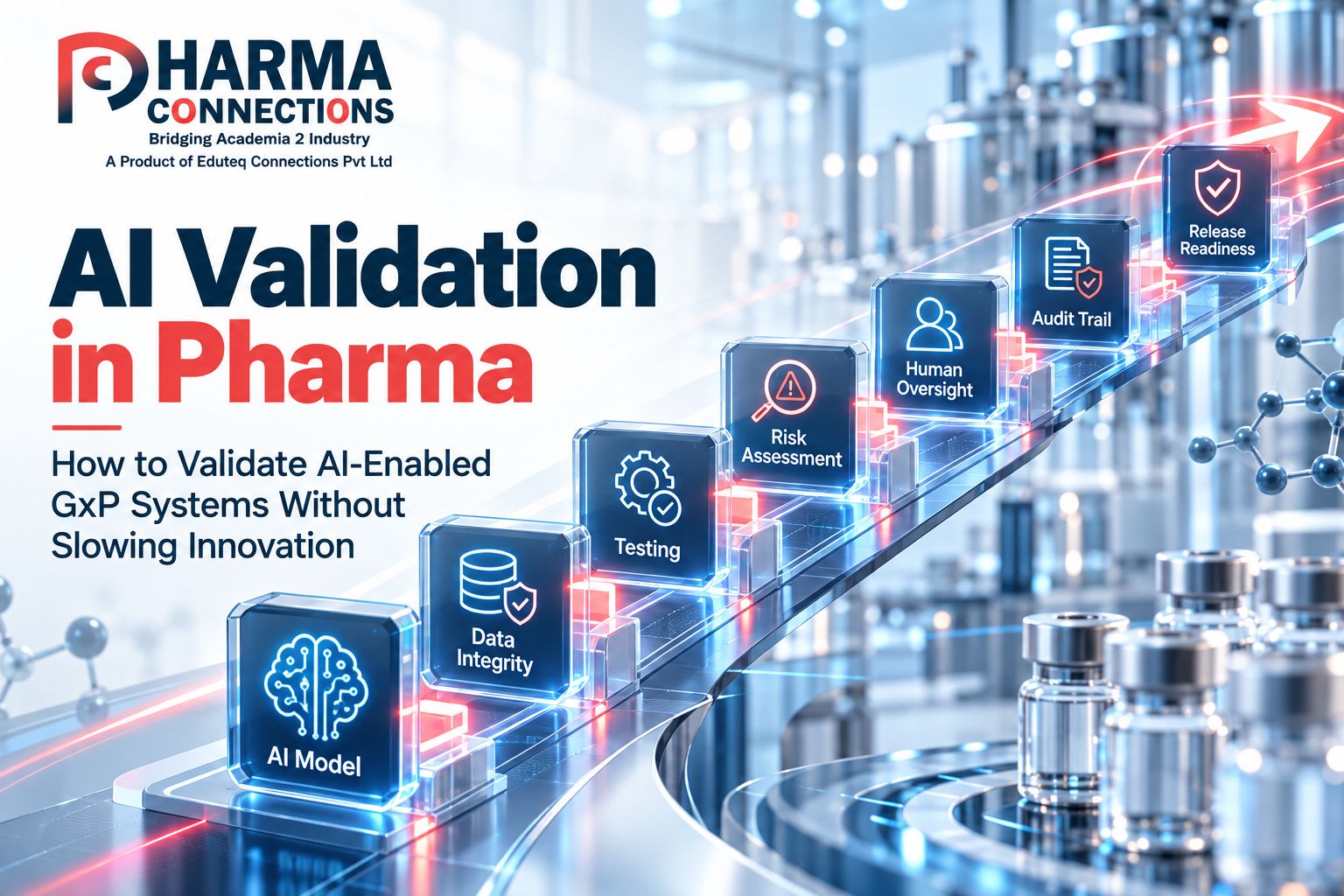
AI Validation in Pharma: How to Validate AI-Enabled GxP Systems Without Slowing Innovation
Artificial intelligence is quickly moving beyond testing into core pharmaceutical processes. AI-based applications can support…

Contract CSV resources: When Should Pharma Companies Use Contract Validation Professionals?
Pharmaceutical validation teams don’t always need the same resources year-round. A business might be adequately…