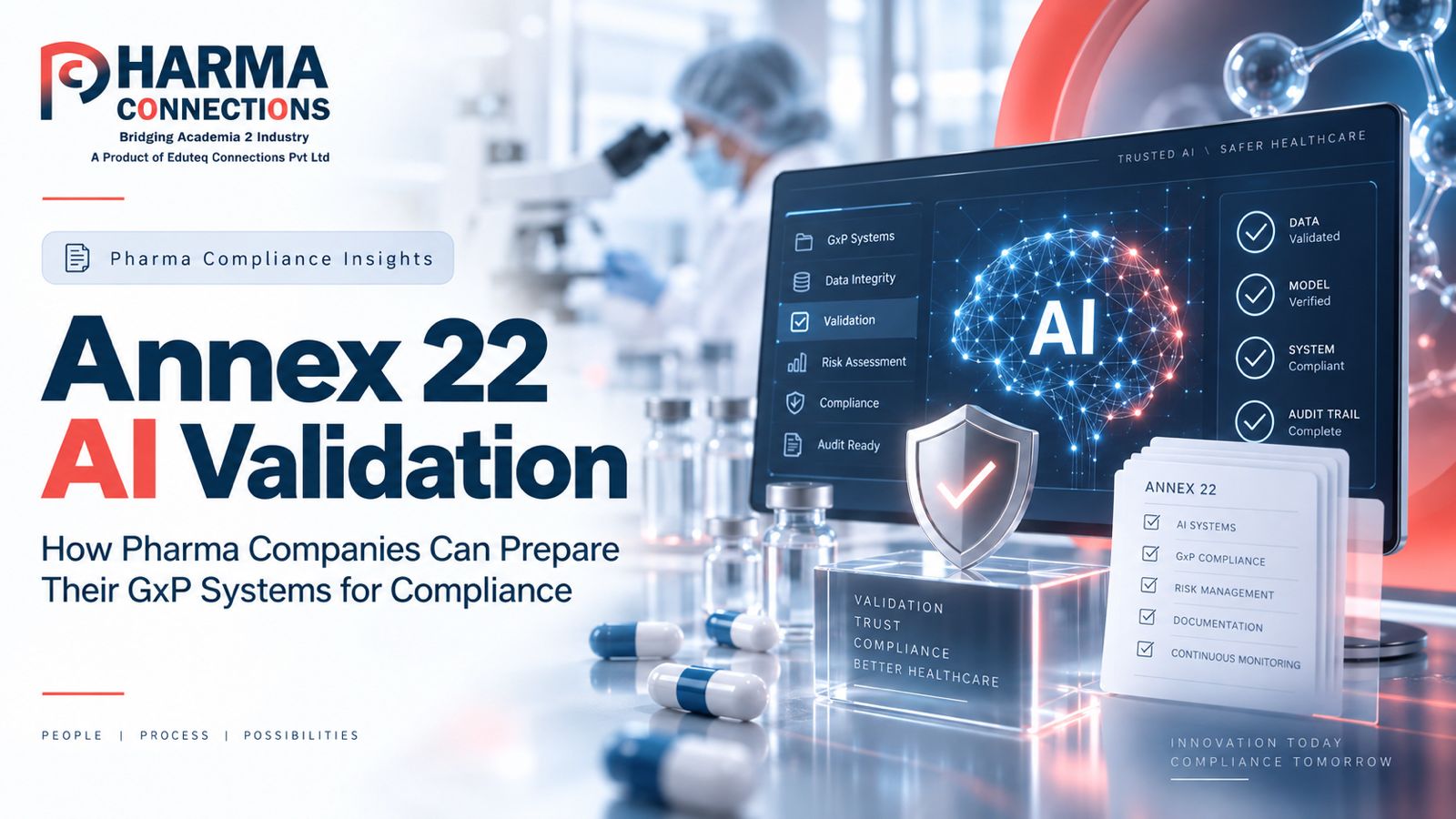
Today, AI, ML, and NLP are ruling the business world, leaving no room for Gxp Application to transform the pharma industry. By utilising these leading technologies in GXP applications, businesses can witness superior operational outcomes, higher product quality benchmarks, and adhere to regulatory standards.
The validation process poses significant challenges regarding regulatory requirements for achieving seamless accuracy, reliability, and traceability. GxP validation ensures that technology-oriented systems adhere to FDA and other guidelines, which call for end-to-end testing, documentation, and risk assessment.
Pharmaceutical manufacturers and companies must comply with good manufacturing practices (GMP), good clinical practices (GCP), and good laboratory practices (GLP), which aim to ensure the standards of their new products meet established guidelines.
Strong GxP compliance standards are essential for maintaining patient health, product safety, and high-quality effectiveness. Continue reading to explore the integration of AI, ML, and NLP in GXP application and validation methodologies.
Understanding Gxp and Its Relevance in Pharma

The Gxp field contains multiple laws that pharmaceutical businesses use to maintain product quality standards while protecting patient well-being. It comprises several subsets:
- GMP (Good Manufacturing Practices): GMP guidelines establish specific protocols to maintain orderly and repeatable pharmaceutical product manufacturing operations. These systems meet product quality standards, prevent contamination problems and mix-ups, and prevent human and procedural errors.
- GCP (Good Clinical Practice): Determine how to ensure scientific and ethical standards for the execution of clinical trials. The system protects the rights of trial participants and safeguards their safety while maintaining the accuracy of trial data.
- GLP (Good Laboratory Practices): Proper documentation is essential for achieving and maintaining regulatory compliance in preclinical laboratory testing environments that adhere to GLP (Good Laboratory Practices).
Through GxP compliance, all pharmaceutical development, testing, and production aspects require strict standard enforcement. Advanced technologies across these frameworks generate improved efficiency, yet they demand dedicated, strict validation checks and monitoring systems to ensure adherence.
AI, ML, and NLP in Gxp Application: Key Use Cases

AI in GxP
Implementing artificial intelligence in Gxp Application compliance offers two significant benefits: automated process integration and predictive data analysis capabilities.
- Predictive Maintenance: Machine performance data analysed by AI systems predicts maintenance requirements. Production equipment sensors stream real-time operational data to AI programs that recognise equipment degradation signs through statistical pattern recognition. Companies that take proactive measures can prevent downtime and continue following GMP standards.
- Automated Quality Inspections: AI-powered computer vision systems combine to enable automatic product inspections on manufacturing lines, identifying defective items before high-quality products are allowed to advance in production.
- Process Optimisation: Production models equipped with AI technology scan operations to determine ineffective points that cause power inefficiency and material utilisation problems. Combining optimal operational factors with GxP requirements leads companies to better production efficiency.
Machine Learning in GxP
Machine learning models’ ability to learn from information and automatically enhance their results makes them essential for upholding Gxp Application standards.
- Anomaly Detection: ML models continuously monitor production processes and identify when they deviate from standard patterns. An ML system detects unexpected temperature rises in reaction vessels through its detection capabilities, which trigger instant corrective actions to ensure adherence.
- Personalised Medicine Development: Machine Learning (ML) uses patient information, including genetic factors, demographic characteristics, and clinical information, to identify treatment-specific subgroups whose members benefit from individualised care. GCP compliance requires treatments to be personalised for individual patient requirements.
- Data-Driven Quality Control: Organisations ensure their products meet GLP standards by continuously evaluating quality metrics using ML-powered tools. These tools can also monitor production process alterations to deliver automated quality control systems.
NLP in GxP
NLP systems excel at language processing through understanding human communication; thus, they provide substantial value when dealing with regulatory documents that rely on extensive text content.
- Document Review and Compliance: The NLP algorithms analyse regulatory documents while detecting compliance violations and checking for GxP requirement conformity. The tools extract pivotal information from FDA guidelines and compare it against current company policies.
- Pharmacovigilance: A pharmacovigilance system relies on NLP to analyse adverse event reports from multiple sources, including patient reports and clinical data. Identified trends through these tools enable timely interventions for GCP compliance and maintenance.
- Clinical Trial Management: NLP enhances the clinical trial management process by automating tasks such as extracting patient data from medical records and identifying suitable trial participants. The system decreases administrators’ workloads while improving Good Clinical Practice adherence rates.
Challenges in AI/ML/NLP Adoption for GxP
Regulatory Hurdles and Data Integrity Concerns
Pharmaceutical businesses must demonstrate to regulatory bodies that their AI systems adhere to strict regulations regarding secure information management, data storage, and information confidentiality. Processing big datasets requires continuous maintenance of regulatory requirements, which proves difficult to handle. The rules governing cross-border data transfer pose implementation challenges when organisations deploy artificial intelligence globally.
Ensuring Explainability and Transparency
The main impediment to AI implementation results from the opaque structure of various prediction systems. Healthcare regulators require that AI systems provide clear explanations of their decision-making processes, as they need to understand the automated processes. AI development is an absolute necessity for acquiring regulatory approval.
Validation and Compliance Audits
Deploying AI, ML, and NLP in a Gxp application requires fundamental validations. Businesses must demonstrate that these tools deliver their intended results, function consistently in various conditions, and consistently comply with regulatory rules. A systems audit schedule is crucial for maintaining compliant operations and addressing regulatory gaps.
Pharma Connections’ training and career-building courses equip all individuals in the pharmaceutical sector to overcome systematic hurdles that impact their work. By enrolling in their courses and training programs, individuals can gain expert-level insights into valuable methods of AI validation and enforcement guidelines that meet regulatory expectations.
Validation of AI/ML/NLP in GxP Application
Artificial Intelligence (AI), machine learning (ML), and natural language processing (NLP) enable essential changes to the processes regulated by GxP (good practices) rules in pharmaceutical development, manufacturing, and quality assurance fields. Implementing these modern technologies creates new challenges in fulfilling regulatory standards, particularly in validation activities.
Key Regulatory Requirements for AI/ML Validation in Pharma
Implementing AI/ML systems in Gxp-regulated industries requires rigorous validation procedures to prove performance reliability alongside accuracy and consistent results, and data integrity standards. The regulatory landscape requires:
- Software Validation: AI/ML tools must fulfil software validation standards, including the FDA’s 21 CFR Part 11 requirements for electronic records and signatures.
- Risk Assessment: A systematic risk assessment must be adopted to identify, evaluate, and mitigate risks that emerge from AI-based systems.
- Traceability: To meet regulatory needs, all data, algorithm work, and results must be traceable through proper documentation systems.
- GxP Alignment: Implementing AI/ML tools must maintain GxP alignment to guarantee safe and effective product quality.
Lifecycle Approach to AI Validation
GxP applications require the lifecycle approach as their primary validation method for AI/ML/NLP systems. AI systems maintain compliance and performance requirements because manufacturers utilise this lifecycle system, which verifies and validates their designs from start to finish.
1. Design Phase
The design phase establishes both the intended system applications and essential requirements that the AI/ML system needs to fulfil:
- Documenting all necessary information about the AI tool starts with defining its intended use and specifying articulated performance specifications and system boundaries.
- The creation of data standards, selection of relevant sources, preprocessing methods, and selection of representative datasets must be defined now.
- Select an algorithm from the available options that meets the interpretation requirements, is robust, and matches the needs of the target application.
2. Verification Phase
Validation confirms that the AI/ML system has been constructed in accordance with its design documentation.
- The algorithm must be tested under laboratory conditions to verify its expected operational results.
- Data Testing assesses the quality, consistency, and suitability of the input data for the AI system.
- Software Verification ensures that the code developed adheres to the guidelines of Good Automated Manufacturing Practice (GAMP) 5 and other standard software development and quality assurance procedures.
3. Validation Phase
AI/ML system validation confirms that its operations function correctly throughout real-world applications.
- Testing the AI system becomes possible through representative datasets to assess its precision, alongside criteria that involve accuracy, sensitivity, specificity, and robustness evaluation.
- Document how the AI system performs GxP compliance by repeatedly achieving specified demands.
- User Acceptance Testing should be performed because it helps confirm that end-users can work efficiently.
3. Guidelines from FDA, EMA, and ICH for AI-Based Tools
FDA
Multiple guidelines from the FDA detail procedures to validate and regulate AI/ML systems that operate in pharmaceutical fields:
- As stated in the Good Machine Learning Practices (GMLP), transparency, data quality, and explainable algorithms are fundamental elements for AI/ML validation.
- The draft guidance document for medical devices utilising AI/ML technology outlines a model that necessitates endpoint validation prior to commercial release and continuous monitoring of aftermarket distribution.
- Under 21 CFR Part 11, electronic systems that use records must demonstrate their trustworthiness while meeting standards equivalent to those of paper-based systems.
EMA (European Medicines Agency)
The EMA provides complete directions about AI-based instruments that focus on clinical research and pharmacovigilance operations
- These guidelines review the quality standards, ethical principles, and regulatory requirements that AI/ML tools need to meet.
- EMA requires that AI systems fulfil the requirements of Gxp standards to guarantee product safety and quality.
ICH (International Council for Harmonisation)
The ICH organisation supports AI/ML system validation through guidelines developed for pharmaceutical applications.
- ICH Q8 (R2): The updated version of ICH Q8 (R2), Pharmaceutical Development, emphasises the necessity of establishing relationships between manufacturing variables and quality features, as such understanding aids AI/ML validation processes.
- ICH Q9: Quality Risk Management provides methods to identify and manage risks associated with the use of AI/ML tools.
- ICH Q10: Pharmaceutical Quality System: Emphasises lifecycle management, change control, and continuous improvement for AI-based systems.
4. Continuous Monitoring and Revalidation of AI Models
AI/ML models remain dynamic because they experience a decline in performance over time. After all, data patterns shift, new inputs occur, or environmental conditions change. AI validation in GxP applications requires endless monitoring and frequent revalidation activities.
1. Performance Drift Detection
AI models must undergo performance drift detection monitoring to assess how the system’s accuracy and reliability change in response to shifts in input data, combined with external environmental conditions. Updated datasets must be tested regularly to detect any drift.
2. Change Control
The AI system requires a controlled modification process for any updates that involve algorithm changes, adjustments to the training dataset, and improvements to the software environment. Update procedures must contain measures to verify that they will neither introduce new security threats nor violate regulatory standards.
3. Periodic Revalidation
AI models require regular verification tests to ensure they meet sufficient performance levels based on established standards and applicable regulatory thresholds. Revalidation may involve:
- The model needs updates through new datasets during retraining.
- Reassessing performance metrics.
- Conducting additional user acceptance testing.
4. Documentation and Audits
The regulatory requirements mandate the complete documentation of all monitoring and validation activities, as well as revalidation procedures. Regular audits enable organisations to prove the compliance and suitability of their AI systems.
Case Studies & Real-Time Examples
Case Study 1: AI-Powered Predictive Maintenance in GMP Manufacturing
Pharmaceutical production operations have implemented a monitoring system based on AI technology for assessing the health of their equipment. The system assessed machine failure predictions through data analysis of vibration, temperature, and pressure readings, achieving a 90% accuracy rate. The preventive system maintained 30% less factory downtime and enabled full GMP compliance. The company conducted comprehensive algorithm testing and joined its predictive system with its quality management platform for validation.
Case Study 2: NLP-Based Pharmacovigilance in GCP Compliance
An NLP tool analysed daily adverse event reports exceeding 10,000 to detect safety signals in live monitoring. This approach accelerated operational response rates, and GCP requirements achieved increased adherence. The NLP model was validated by historical data testing and scheduled audits to maintain data precision.
Case Study 3: ML-Based Quality Control in GLP Testing
The laboratory applied GLP-compliant methods, allowing ML algorithms to analyse test results and identify small patterns that indicated possible problems. This improved data reliability and compliance. A validation process required the ML model to undergo tests against manual assessments alongside data validation across different datasets.
Future of AI/ML/NLP in GxP Application
Here is a quick glimpse of the future of AI/ML/NLP in GxP applications that will help you get ready to witness the world of advanced technologies in GxP applications across the pharma sector:
Rise of AI-Driven Regulatory Compliance Solutions
The adoption of AI technologies continues to increase for processing compliance-based operations, which produce audit trails, document procedures, and handle changes. These operational tools enhance organisational efficiency and reduce the likelihood of employee-generated errors.
Integration of AI in Digital Twins for Pharma Manufacturing
The pharmaceutical sector is adopting digital twins as virtual models of physical processes, making them one of its essential elements. Digital twins utilising AI technology provide virtual manufacturing simulations that enhance production control variables while upholding GMP regulatory standards.
Evolving Regulations and Staying Ahead
Companies must actively adapt to regulatory changes associated with new technologies while investing in employee training. Companies must track regulatory developments to maintain compliance and fully leverage the benefits of AI implementation.
Enabling AI-Driven Pharma Careers
Pharma Connections offers customised training programs that empower pharmaceutical industry employees to work in positions handling AI functions. The educational programs at Pharma Connections prepare their learners with lessons about GxP principles and AI validation methods to become proficient professionals in a changing pharmaceutical sector.
Conclusion
AI, ML, and NLP represent a fundamental revolution in how pharmaceutical organisations approach a GxP application. Integrating these technologies in a Gxp Application brings exceptional chances to strengthen operational efficiency while improving accuracy rates and regulatory compliance. The systems require specific validation processes that must be fully adhered to, following regulatory guidelines.
Individuals looking to gain the best hands-on experience with AI in the pharmaceutical sector can enrol in training programs, consulting, and courses offered by Pharma Connections. Pharma Connections is a leading training and consulting company transforming the careers of healthcare and life science professionals, assisting them to upskill in the age of technology. By partnering with Pharma Connections, you can secure a thriving career in the pharmaceutical industry. We help individuals gain expertise in utilising AI solutions effectively, enabling them to advance innovation while maintaining regulatory standards.
Professionals who want to maintain their leading position in the dynamic pharmaceutical sector must turn to Pharma Connections to enrol in training programs and career consulting to kickstart a future-proof career.
Related Posts

How to Find Qualified CSV and CSA Professionals for GxP Projects
When pharmaceutical and life sciences companies manage regulated technology projects, they must recruit the right…
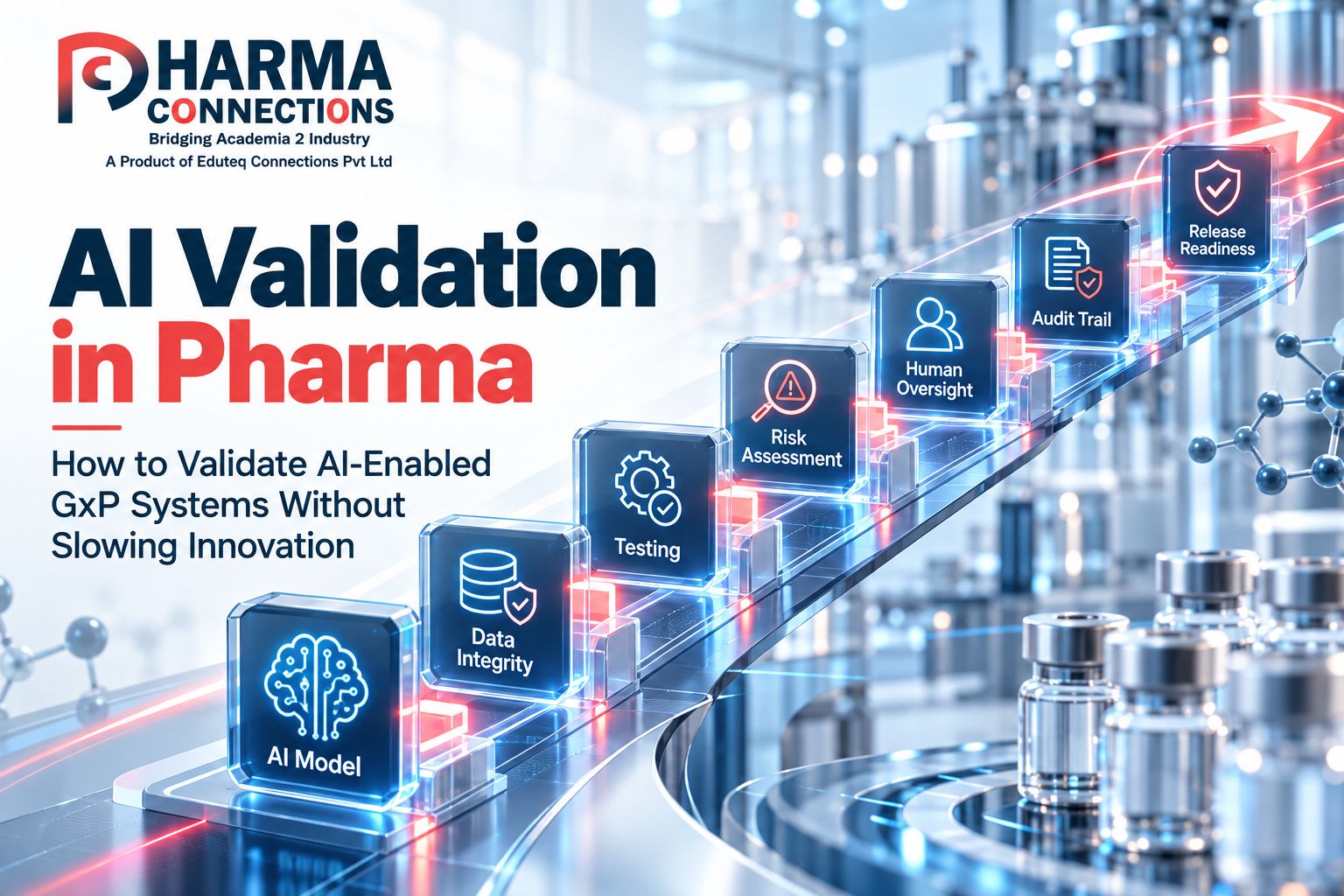
AI Validation in Pharma: How to Validate AI-Enabled GxP Systems Without Slowing Innovation
Artificial intelligence is quickly moving beyond testing into core pharmaceutical processes. AI-based applications can support…
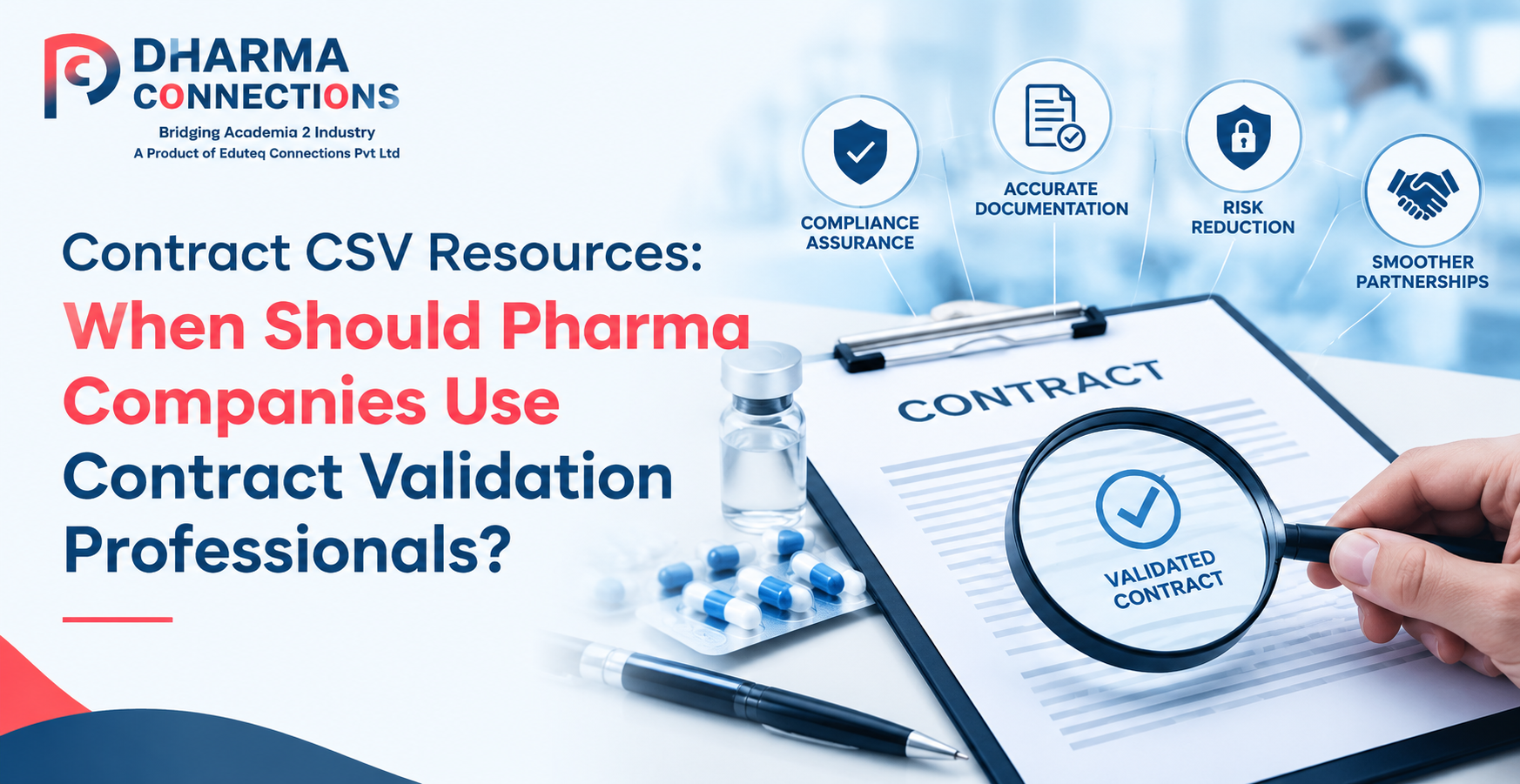
Contract CSV resources: When Should Pharma Companies Use Contract Validation Professionals?
Pharmaceutical validation teams don’t always need the same resources year-round. A business might be adequately…