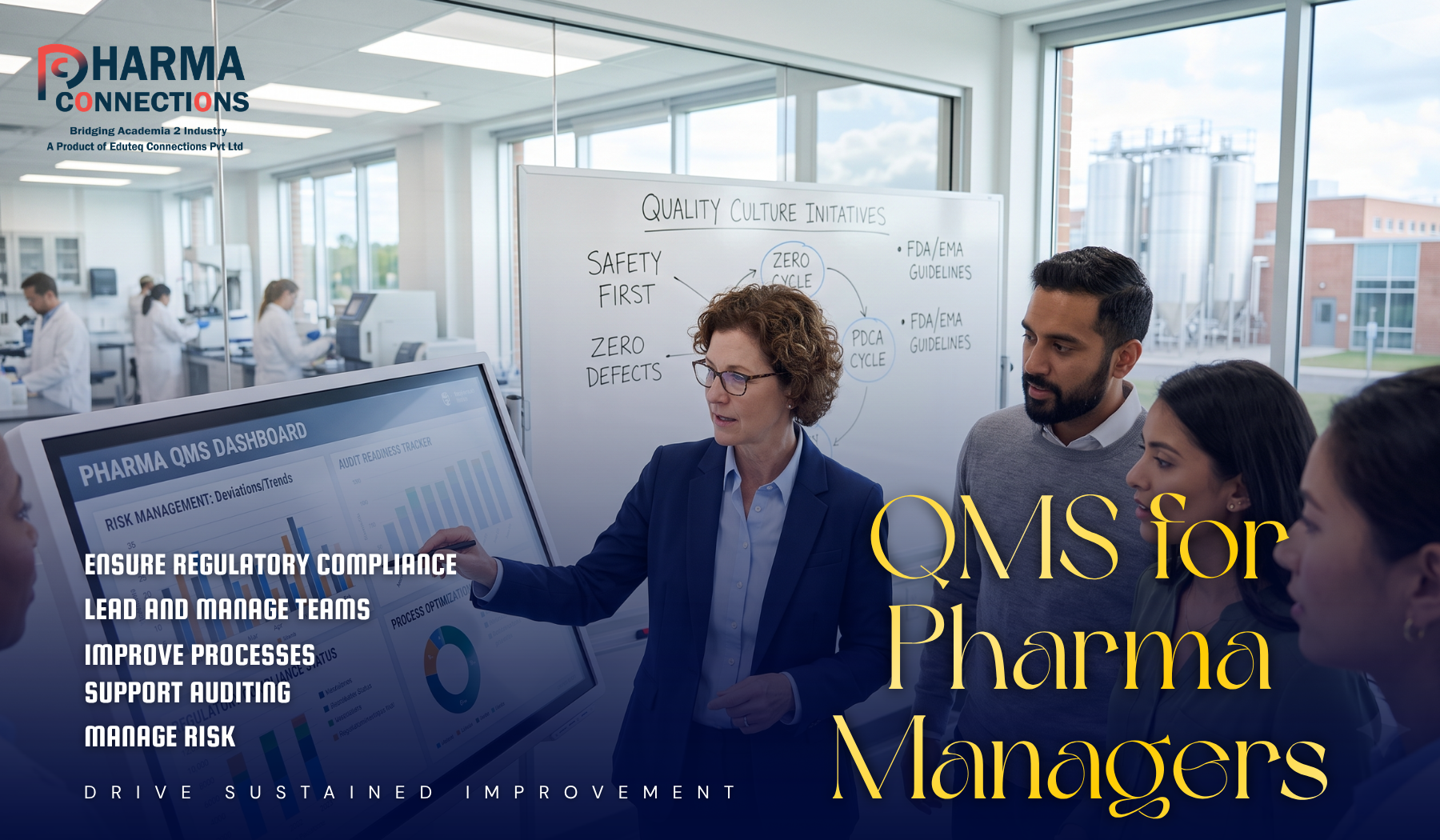
QMS for Pharma Managers has become a key specialization, with pharmaceutical firms placing greater emphasis on quality, compliance, operational efficiency, and digitalization. QMS for Pharma Managers today is not meant to monitor day-to-day operations; it is meant to lead and manage teams, improve processes, manage risk, support auditing, and ensure regulatory compliance in the departments they lead.
A strong grasp of Quality Management Systems (QMS) helps managers make quality decisions, build a culture of quality, and drive sustained improvement without jeopardizing product quality and patient safety.
As organizations continue transitioning to electronic quality systems and modern compliance practices, managers with hands-on experience in quality management systems are becoming more desirable leaders. Whether you’re a team leader, supervisor, or pharmaceutical professional, building QMS expertise can fast-track leadership development and open long-term career prospects.
Why Quality Knowledge Matters More Than Ever for Pharma Managers
The role of QMS for pharma managers has grown significantly over the last ten years. Beyond people management and achieving business goals, managers are now responsible for compliance, improving quality systems, and driving organizational growth. That is why QMS knowledge has become a crucial leadership competency throughout the pharmaceutical sector.
Managers Are Responsible for Compliance
All departments have to conduct their work in accordance with regulatory criteria and internal quality standards. QMS-knowledgeable managers can enforce compliance in the processes teams follow.
Quality Directly Impacts Business Performance
Good quality systems minimize deviations, improve operational efficiency, reduce compliance risks, and strengthen consumer confidence. Managers contribute significantly to achievements.
Regulatory Expectations Continue to Increase
Regulatory bodies worldwide require companies to maintain strong quality systems supported by strong leadership. Knowledgeable managers help organizations stay inspection-ready through their QMS expertise.
Digital Quality Systems Are Becoming Standard
Using eQuality Management Systems (eQMS), computer-assisted workflows, and online documentation systems requires managers to have strong knowledge of quality and cutting-edge technology.
Leadership Requires Process Improvement Skills
Effective managers continually improve operations, minimize operational risks, and encourage quality-based decision-making across their departments. A QMS provides the framework to achieve these goals.
How QMS for Pharma Managers Helps Pharma Managers Become Better Leaders
The pharmaceutical industry is not limited to teamwork and meeting production goals. Good QMS for Pharma Managers: They need to create a quality culture, follow regulations, and make decisions that safeguard product quality and patient safety. In this context, QMS pharma managers can serve as a useful leadership tool, enabling managers to lead with confidence while promoting operational excellence.
Improves Decision-Making
QMS provides managers with standard operating procedures, documented processes, and risk-based approaches that support operations- and quality-related decisions.
Strengthens Compliance Leadership
QMS knowledge helps managers understand regulatory expectations, quality policies, and internal processes, enabling them to steer teams with confidence in uniform compliance.
Builds a Quality-First Culture
Strong leadership practices encourage staff to follow standard procedures, report quality concerns, drive continuous improvement, and take responsibility for regulatory compliance.
Enhances Cross-Functional Coordination
A QMS for Pharma Managers helps managers collaborate with quality assurance, manufacturing, engineering, validation, regulatory affairs, warehousing, and supply chain teams to achieve shared quality goals.
Supports Continuous Improvement
When managers understand how to apply the QMS, they can identify opportunities to improve, reduce recurring problems, streamline operations, and take corrective measures that enhance organizational performance.
Leadership Skills Strengthened Through QMS
Quality management systems help management develop leadership skills beyond technical knowledge. These competencies enhance teamwork, work efficiency, and career development over the long run and equip the professionals to handle higher management duties.
Risk-Based Thinking
Managers learn how to detect potential operational risks, assess their possible effects, and adopt preventive measures to safeguard product quality and legal standards.
Problem-Solving and Root Cause Analysis
QMS educates managers on how to investigate deviations, identify root causes, implement CAPA to drive positive outcomes, and prevent recurring quality issues.
Audit and Inspection Readiness
Managers learn how to prepare teams for internal, customer, and regulatory audits and maintain compliant documentation and quality systems.
Team Leadership and Accountability
Quality-focused managers set clear expectations, encourage compliance, mentor team members, and hold people accountable for maintaining high-quality standards across the organization.
Strategic Process Improvement
QMS also helps managers analyze the current workflows, increase efficiencies, minimize operational quality risks, and align departmental objectives with organizational quality-binding objectives.
Benefits of QMS for Pharma Managers
As pharmaceutical organizations strengthen quality systems and regulatory compliance, there is growing interest in the value of managers with hands-on QMS experience. Not only does understanding pharma QMS strengthen day-to-day leadership, but it also opens opportunities for career advancement, increased responsibility, and greater organizational influence over the long term.
Better Leadership Opportunities
Employers tend to assign managers who understand quality systems because they can guide teams without compromising compliance, improve operations, and support business goals.
Improved Audit Readiness
QMS for Pharma Managers would assist in making sure that departments are always inspection-ready through maintaining paperwork and checking on compliance as well as correcting quality problems before they turn into big risks.
Stronger Team Performance
When a manager is familiar with quality management systems, he or she is able to create standardized processes, enhance communication, minimize errors, and institute a culture of continuous quality improvement.
Greater Cross-Functional Influence
Knowledge of QMS will help managers work closely with quality assurance, manufacturing, validation, engineering, regulatory affairs, warehousing, and supply chain to address quality efforts at an organization-wide level.
Long-Term Career Growth
As pharmaceutical companies increase investments in quality excellence, digital quality systems, and regulatory compliance, managers with strong QMS expertise are well positioned to become senior leaders and strategic management resources.
Why Pharma Companies Prefer Managers With QMS Expertise
Quality and compliance in the pharmaceutical industry are related heavily to leadership. Businesses have realized that managers with strong knowledge of quality management systems can help facilitate teams, reduce risks, enhance operational performance, and ensure they meet regulatory standards. This makes QMS expertise a significant qualification for current and future leaders.
They Lead Compliance-Driven Teams
QMS-experienced managers also make sure their departments adhere to GMF requirements, internal protocols, and expectations put by regulators and still maintain high-quality standards.
They Reduce Operational Risks
With quality systems knowledge, managers can identify potential risks early, take corrective action, and eliminate problems that could affect product quality or regulatory compliance.
They Improve Business Efficiency
Effective quality management practices help remove unnecessary processes, minimize recurring deviations, improve production, and support ongoing operational improvement.
They Support Organizational Growth
QMS product managers help make the business sustainable by strengthening quality systems, building customer trust, and ensuring consistent compliance across operations.
They Prepare Teams for the Future
With ongoing digital transformation in the pharmaceutical industry, QMS-rationalized managers help teams transition effectively to electronic quality systems, automated workflows, and regulatory changes.
Why Pharma Connections Is Best for Building QMS Leadership Skills
Pharma Connections is the place where professionals may gain QMS development to pharma managers and create successful leadership careers in the pharmaceutical industry. The training programs combine practical quality management and pharmaceutical experience and culminate in equipping professionals to strengthen their leadership skills as they prepare to take on greater responsibility as administrators.
Industry-Focused QMS Training
The curriculum covers CAPA, deviations, change control, document control, internal audits, quality risk management, GMP, compliance, and continuous improvement, based on existing pharmaceutical industry practices.
Practical Learning With Real Industry Scenarios
Participants will gain hands-on experience with quality systems, compliance workflows, audit file completion, investigations, and process enhancement activities routinely undertaken within pharmaceutical organizations.
Guidance From Experienced Industry Experts
Industry professionals offer practical knowledge of pharmaceutical quality management, challenges faced in leadership roles, regulatory expectations, and operational excellence to help learners build confidence as managers.
Leadership-Oriented Skill Development
The training emphasizes decision-making, compliance management, team leadership, risk assessment, and continuous improvement skills that help pharma managers pass the test successfully.
Career Growth Support
Pharma Connections encourages professionals to train for promotions, managerial roles, leadership, and long-term professional growth by gaining practical QMS skills aligned with industry requirements.
Conclusion
In today’s pharmaceutical industry, technical skills can no longer guarantee leadership success alone. Managers are supposed to drive compliance, enhance quality systems, enhance operational performance, and lead teams through the digital transformation and ensure that the regulations are upheld. That is why QMS competence is vital for pharma managers interested in becoming senior managers.
Gaining practical knowledge of the Quality Management System helps managers make better decisions, build high-performing teams, improve audit readiness, and support continuous business improvement. With quality excellence remaining a major focus for organizations, a workforce with a strong QMS background will remain competitive in pharmaceutical and life sciences organizations.
Pharma Connections is the optimal choice for practical QMS training because pharma managers want to learn QMS skills faster. Pharma Connections provides professionals with the quality management skills necessary to take charge and perform effectively in the dynamic pharmaceutical industry through industry-oriented practice, high-quality faculty, real-life case studies, and career-oriented training programs.
FAQs
1. Why is QMS important for pharma managers?
QMS helps pharma managers strengthen compliance, improve decision-making, support audits, manage quality systems, and lead continuous improvement initiatives.
2. Can QMS training help professionals move into leadership roles?
Yes. QMS training develops leadership, compliance, risk management, and quality improvement skills that support career progression into supervisory and managerial positions.
3. What leadership skills does QMS develop?
QMS strengthens decision-making, problem-solving, audit management, team leadership, process improvement, risk assessment, and compliance management.
4. Who should learn QMS for pharma managers?
Team leaders, supervisors, quality assurance professionals, production managers, compliance specialists, and experienced pharma professionals preparing for leadership roles can all benefit.
5. How can Pharma Connections help pharma managers?
Pharma Connections provides practical, industry-focused QMS training that helps managers build leadership capabilities, improve compliance knowledge, and prepare for long-term career growth in the pharmaceutical industry.
Related Posts

How to Find Qualified CSV and CSA Professionals for GxP Projects
When pharmaceutical and life sciences companies manage regulated technology projects, they must recruit the right…

AI Validation in Pharma: How to Validate AI-Enabled GxP Systems Without Slowing Innovation
Artificial intelligence is quickly moving beyond testing into core pharmaceutical processes. AI-based applications can support…

Contract CSV resources: When Should Pharma Companies Use Contract Validation Professionals?
Pharmaceutical validation teams don’t always need the same resources year-round. A business might be adequately…