The problem with pharmaceutical companies today is not that they have systems but how to control them. Digital solutions such as ERP, LIMS, QMS, and cloud-based solutions are well-integrated into operations. However, these systems can only be approved and used properly to avoid compliance risks, rather than serve as business enablers.
Validation is no longer a matter of documentation. It is concerned with ensuring that systems work as expected, maintain data integrity, and meet regulatory requirements at each stage. Meanwhile, more modern models, such as Computer Software Assurance (CSA), are moving validation to a risk-based, effective process.
The internal expertise of most organizations is not in place to implement this properly. This is why the services of a consultant are becoming essential. This paper describes Computer System Validation and CSA consulting work, how they operate, the process, the benefits to pharma companies, and the actual compliance impact.
Computer System Validation consulting services assist pharma companies in being compliant, reliable, and audit-ready across all aspects of their computerized systems lifecycle.
CSA consulting supplements this with a modern, risk-based validation approach that minimizes unnecessary effort while maintaining control.
These services are combined and aimed at:
To put it simply, Computer System validation and CSA consulting ensure that systems are not merely put in place but managed, conformed, and trusted.
Pharma companies are not having problems with their systems, but rather with properly validating and controlling them. With more digitalization of operations, compliance management on various platforms becomes more complex. ERP systems, LIMS, QMS, cloud applications, everything has to be approved, documented, and maintained under severe regulatory expectations. And this is precisely why Computer System Validation consulting has become a necessity rather than an option.
The operations of modern pharma are based on the interconnection of systems. It is not sufficient to validate each system separately, but organizations should control the integration, the data flow, and system behavior. Computer System Validation consulting helps map this complexity and ensure systems do not have compliance gaps.
Regulators demand that systems are verified and managed throughout their lifecycles. It is not just a matter of documentation, but organizations must show actual system performance. Computer System Validation consulting also assures compliance with GxP, FDA, and international standards.
Validation involves a mix of technical knowledge, regulatory knowledge and experience. Most internal teams lack this specialization. Computer System Validation consulting also involves experienced professionals who are aware of compliance requirements and system behavior.
Conventional validation methods tend to over-document or overlook important risks. Contemporary schemes, such as CSA, mandate a risk-based approach. CSV consulting aids organizations in moving to effective validation strategies.
Poorly designed or unvalidated systems may lead to data integrity issues, audit findings, and regulatory fines. Consulting services help identify and reduce these risks at an early stage.
Validation is not an activity that takes place once. Evolution is a natural development of systems, and changes need to be managed. Computer System Validation consulting ensures continuous compliance by managing the lifecycle.
Validation projects are commonly delayed due to confusion or duplication without expert help. Consulting will provide an organized implementation and quicker accomplishment.
Consulting means that systems are always audit-ready, not merely inspected. Teams develop an understanding of how to provide validation evidence and respond to the auditors.
A good Computer System Validation consulting process does not consist of mindlessly filling in templates; it instills control, clarity, and compliance into each phase of the system’s lifecycle. The appropriate method yields pragmatic, risk-focused validation that is compliant with actual regulatory expectations. The steps are to ensure that gaps are removed, the number of rework is minimized, and systems are audit-ready on the first day.
The process starts with a full understanding of what the system is and why it is there. In the absence of this, validation would either be too much or too little.
This step defines the path to follow throughout the lifecycle of Computer System Validation.
Consultants will evaluate the existing system configuration to know what is lacking or irregular with compliance requirements.
This ensures that efforts are made on actual issues rather than on presumptions.
Risk is a motivator to validation. This measure will ensure high-impact areas receive first priority.
A Computer System Validation technique based on risk enhances efficiency and compliance.
A vivid validation roadmap is developed outlining how the system will be validated.
This avoids confusion and ensures structured execution.
Documentation is written or enhanced to achieve validation and audit readiness.
Documentation is maintained concisely, pertinently, and in line with the system’s requirements.
The system is put to test to ensure it operates under actual conditions.
This ascertains that the system is sound and compliant.
The compilation of all validation activities is presented in structured reports for audit.
This guarantees transparency and regulatory acceptance.
Implementation is not the end of validation. Changes are controlled, systems evolve.
This ensures long-term compliance.
Consultants train organizations to be ready to handle regulatory audits.
This minimizes risk in regulatory contacts.
The last step is necessary to ensure that internal teams can maintain validation independently.
Conventional Computer System Validation was often paper-based; teams spent more time writing documentation than managing actual risks. CSA (Computer Software Assurance) is different. It shifts validation from a checklist orientation to a performance- and risk-based approach. The idea is straightforward: concentrate energy where it is needed the most in patient safety, product quality, and data integrity.
CSA focuses on the most important system functions rather than on the validation of all the functions. This renders Computer System Validation more meaningful and focused.
In the case of CSA, the validation process is more effective. Teams spend less time on low-risk documentation and more time on high-risk verification.
CSA permits adaptable testing methods based on the system’s degree of complexity and risk.
The removal of redundant paperwork and compliance with regulations are among the largest benefits of CSA.
Traditional validation has difficulty with dynamic systems. CSA is flexible to technologies such as the AI and cloud.
Regulators are promoting smarter validation approaches. CSA does not contradict these expectations since it is oriented towards risk and systems performance.
Validation does not give value to Pharma companies by simply filling out documents. The true worth lies in having systems that are in control, reliable, and audit-ready at any given time. This is what Computer System Validation consulting provides. It implements organization, skills, and effectiveness in validation so that organizations shift between the reactive and the proactive control.
Consulting ensures that validation is aligned with GxP, FDA, and global regulatory expectations. Systems are not only validated but also backed with clear, audit-ready documentation.
Data integrity is one of the biggest regulatory focus areas. Computer System Validation consulting ensures that systems accurately and securely generate, process, and store data.
Consultants identify and manage risks before they become compliance issues. A risk-based approach ensures focus on high-impact areas.
Modern consulting integrates CSA principles, reducing unnecessary documentation and improving efficiency.
Validation ensures that systems perform consistently under real conditions. This improves operational efficiency and reduces system-related failures.
Without expert guidance, validation projects often face delays and rework. Consulting provides a clear roadmap for efficient execution.
Consulting not only delivers validation but also builds internal capability. Teams learn how to manage systems effectively.
Pharma compliance is not an issue of systems but of demonstrating that systems are working reliably and at every level. That evidence is through rigorous Computer System Validation. When properly implemented, it transforms haphazard controls into a defensible, audit-ready system with all actions, records, and decisions being traceable and defensible.
Validation provides clear evidence that systems perform as intended and that data remains accurate, complete, and secure throughout its lifecycle.
A structured Computer System Validation approach ensures systems meet FDA, EMA, and GxP expectations not just on paper but in practice.
Well-validated systems produce fewer findings because risks are identified and controlled early.
Validation entrenches mechanisms that safeguard data throughout its lifecycle, which is a key regulatory priority.
Validation makes the use of systems standard and less variable, which is usually a point of concern for auditors.
Systems are dynamic, yet adherence is needed. Computer System validation makes sure that all changes are evaluated, approved, and validated.
Having validation establishes clear evidence and stories for the auditors by organizations.
Failure to comply has operational and financial risks. Certification mitigates exposure and enhances control.
Weak system validation by Pharma companies is unaffordable. With the ever-increasing digital systems, reliability, compliance, and control become very essential. That is why Computer System Validation and CSA consulting services are no longer optional; they are necessary.
Compliance does not mean as much as expert consulting in organizations. They become clear and efficient and have confidence in their systems. They eliminate risks, enhance audit results, and enhance operational underpinnings.
Pharma Connections is a reputable CSV training provider, offering structured, industry-oriented services. Having experience in both conventional validation and contemporary CSA methods, it assists companies in shifting the compliance to the control.
Pharma and life sciences companies are managing technology environments that just keep getting more complex.…
Pharmaceutical companies use computerized applications in manufacturing, laboratories, quality management, clinical operations, supply chain, and…
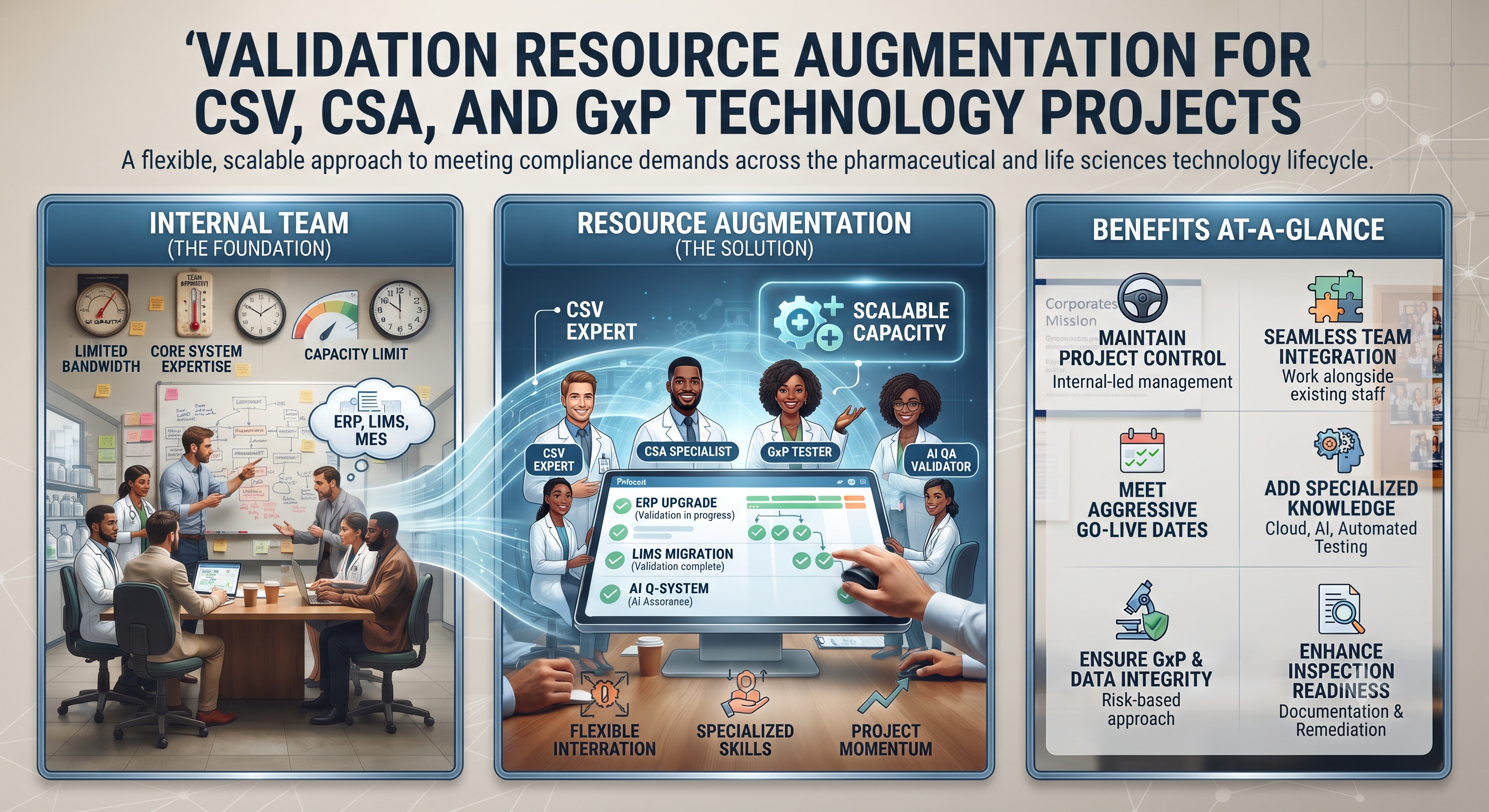
Pharmaceutical validation workloads change rapidly. An internal team with normal operations can find themselves in…
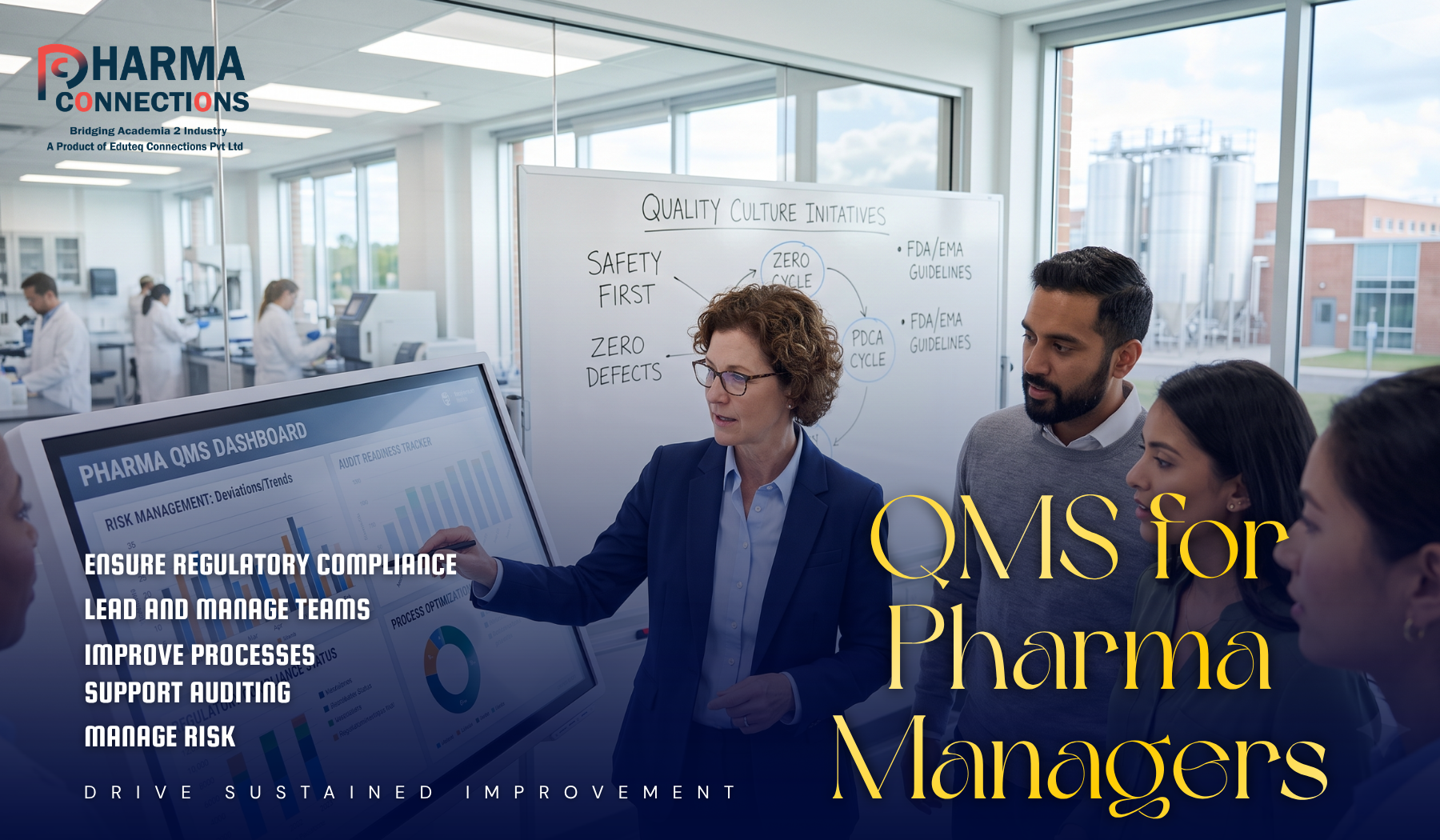
QMS for Pharma Managers has become a key specialization, with pharmaceutical firms placing greater emphasis…

Pharma Connections, Established on February 14, 2019, A Product of Eduteq Connections Pvt Ltd (An ISO 9001:2015 certified company), is dedicated to providing training and upskilling opportunities for Life science Professionals.
Read More