The pharmaceutical industry is undergoing rapid changes due to advancements in computer technology and the evolution of quality management system certification. Smart computers and learning machines are making a significant difference in how companies ensure their medicines are safe and comply with regulations. Companies now face stricter regulations and supply chains that span multiple countries. They need better systems that can think and learn, rather than just following outdated manual steps.
People who work in quality control need to understand how advanced computers are transforming the way we verify medicines and adhere to safety regulations. Today’s quality management courses online, such as those from Pharma Connections, are incorporating new computer skills to help students prepare for tomorrow’s jobs.
This guide explores the collaboration between smart computers and learning machines in drug quality control.
Here’s how smart computers and learning machines are changing how drug companies check quality and make sure everything is safe:
Smart computer programs analyse historical factory data to predict when issues may arise during the production of medicines. Companies can fix problems before they happen. This means fewer bad batches get sent back and fewer problems with rule-makers.
Computer tools can automatically check and analyse all the records that document what happened during the drug-making process. They find problems with following rules much faster than people can. This helps a lot when the FDA needs to check everything.
Special computer programs that understand human language can generate high-quality reports, step-by-step guides, and test documents independently. This saves time and stops people from making mistakes when writing.
Learning machines continuously monitor factory conditions using sensors and connected devices. They spot when temperature, moisture, or machines are not working right. This ensures that everything follows the strict guidelines for manufacturing medicines.
Managing risks in quality control now uses smart computers. These programs give risk scores to different factories, products, and suppliers. This helps companies make more informed decisions about addressing existing issues and preventing new ones.
Traditional methods of quality control, which were once performed manually, are being replaced by automated systems that utilise data to inform decisions. Smart computers and learning machines have become powerful tools that enable faster work, reduce mistakes, and help companies consistently follow rules.
Here’s why these technologies are now required, not just nice to have, in modern quality control systems.
Enrolling in quality training courses online enables high-quality teams to prevent problems before they occur, rather than just fixing them afterwards. Learning machines can predict quality failures or mistakes by analysing what happened previously.
For example:
This method of assessing risks using data significantly reduces the likelihood of product recalls or regulatory issues for companies.
Smart computer tools can do boring quality control jobs automatically, like:
This automation makes workers more productive, reduces dependence on individuals, and allows quality teams to focus on making important decisions.
When people make mistakes in paperwork, procedures, or audit records, companies can break rules and face expensive problems. Smart computer validation tools can:
This results in increased accuracy, the ability to understand what is happening in real-time, and preparedness for audits.
Learning machine programs process huge amounts of data from different places like factory logs, problem reports, and fix records, to create useful insights.
Quality managers can:
Being able to make smart decisions quickly makes products safer and gets them to market faster.
The worldwide push toward Pharma 4.0, which encourages automation and smart systems, requires professionals to understand digital tools like smart computers and learning machines. Rule agencies, such as the FDA, EMA, and WHO, are embracing and welcoming the application of these technologies in doing quality and compliance work.
Professionals trained in these technologies are better prepared to:
At Pharma Connections, we know that quality assurance is not just about paperwork and inspections anymore. The future belongs to professionals who can connect quality science with data science. That’s why our online quality management courses now prioritizes:
Quality management training online equips you with the knowledge of how smart computer models assess risk and automatically prioritise risks across multiple product lines.
Students learn about learning machine tools that flag repeating problems using old batch and equipment data.
Our course includes basic training on analyzing trends from fix reports, change controls, and audit findings.
Gain insights into how smart computers are integrated into real-world quality management system tools, such as MasterControl, Veeva Vault QMS, and TrackWise.
Understand how smart computers and learning machine tools follow FDA 21 CFR Part 11, ICH Q10, and GAMP 5 guidelines.
Get qualified for high-demand jobs like:
You’ll learn how to analyze problem trends, fix effectiveness, and audit results using smart dashboards.
Knowledge of smart computers bridges the gap between quality management, IT, regulatory affairs, and data analytics. This opens doors to jobs that span multiple departments.
Pharma Connections ensures that learners receive verifiable certification that demonstrates proficiency in smart computer and learning machine skills. This makes resumes and LinkedIn profiles stand out more.
The drug industry is constantly evolving, and smart computers will become a key component of quality assurance and compliance work. Many organizations are still in the early stages of using these technologies in their quality systems.
But the future is clear. Smart computers will not only be helpful additions but also necessary for ensuring products are of high quality, adhering to regulations, and implementing excellent processes.
Here’s what will happen with smart computers in drug quality management, and why professionals trained in this area will lead the next wave of change.
Today, quality assurance largely relies on manual checks, paper audits, and static procedures. Soon, automated quality systems powered by intelligent computers will become the norm.
These systems will:
Such intelligent systems will lead to a decrease in the repetition of manual efforts, enhanced adherence, and substantially reduced errors in reporting and documentation.
Drug companies are already investing in advanced computer analytics tools to develop interactive quality dashboards. In the future:
The result of this change will be more timely investigations, quality intervention proactiveness, and easier control of the supply chain.
Predictive analytics will play a critical role in:
Instead of reacting to quality failures, organisations will use learning machine models to anticipate risks and act before they get worse. This will minimise downtime, avoid recalls, and make patients safer.
Smart computers will increasingly take over the management of Corrective and Preventive Actions:
This level of automation will make organisations ready for inspections at all times. This is particularly critical in a world where remote audits are becoming increasingly common following the pandemic.
Smart computer programs that understand human language will automatically review:
These tools will flag inconsistencies, ensure terminologies match regulatory standards, and significantly reduce document review time for both quality assurance and regulatory affairs teams. Future systems may even automatically generate documents ready for submission.
Read More: The Future of Clinical Research and Data Management in Pharma
The future of drug quality assurance depends on combining quality science with smart automation. As smart computers and learning machines continue to reshape the landscape, professionals equipped with this knowledge will lead the way in ensuring safer, faster, and more compliant drug development processes.
At Pharma Connections, we’re not just teaching quality management; we’re also fostering a culture of excellence. Our quality management training courses prepare you for the digital future of the pharmaceutical industry. Enrol today in our high-quality management training courses and take the next significant step in your career.
Smart computers aid in the automation and simplification of quality management processes, including issue tracking, issue management, and real-time monitoring. They enable predictive analysis, improve compliance, and reduce human error. This enables quality processes to be faster, more accurate, and ready for audits.
Machine learning is a technique that identifies patterns based on past information and predicts future outcomes. Learning machines are utilised in drug quality assurance to identify potential quality issues before they occur, assess the effectiveness of addressing a problem, and enhance decision-making in various quality control systems.
No, not at all. At Pharma Connections, our courses are designed for non-technical learners with backgrounds in the pharmaceutical industry or life sciences. We teach smart computer and learning machine concepts in a simple, application-focused manner relevant to drug quality management.
Professionals with expertise in smart computer and learning machine technologies are in high demand as drug companies transition to digital quality management systems. This skillset opens doors to modern roles like Quality Data Analyst, Digital QA Specialist, or AI-QMS Integrator, offering faster growth and higher salaries.
Yes. Our online quality management course features dedicated modules on smart computer and learning machine applications in drug quality assurance, complemented by real-world case studies. After successful completion, you receive a verifiable certification that highlights your digital quality skills.
When pharmaceutical and life sciences companies manage regulated technology projects, they must recruit the right…
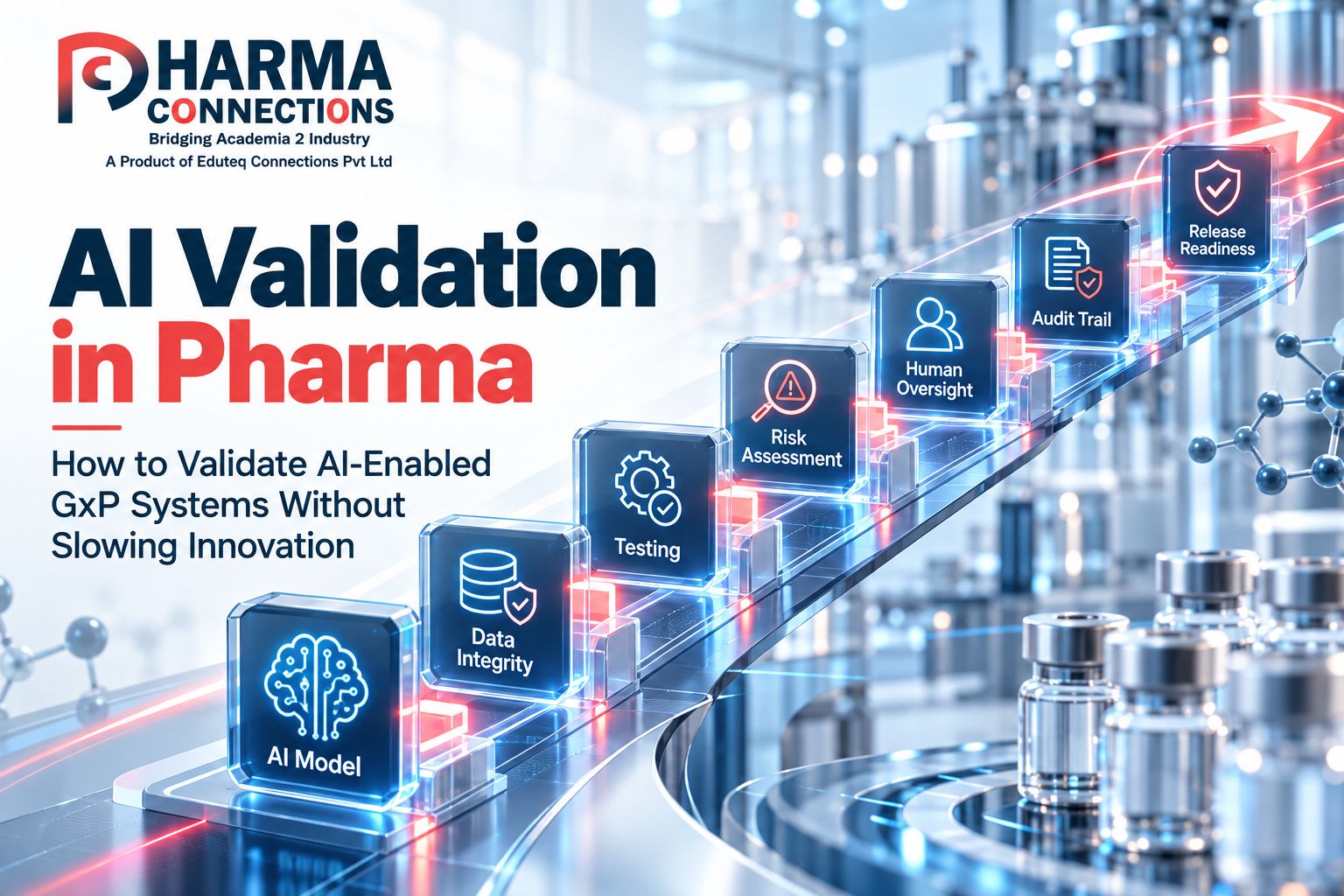
Artificial intelligence is quickly moving beyond testing into core pharmaceutical processes. AI-based applications can support…
Pharmaceutical validation teams don’t always need the same resources year-round. A business might be adequately…

Pharma Connections, Established on February 14, 2019, A Product of Eduteq Connections Pvt Ltd (An ISO 9001:2015 certified company), is dedicated to providing training and upskilling opportunities for Life science Professionals.
Read More